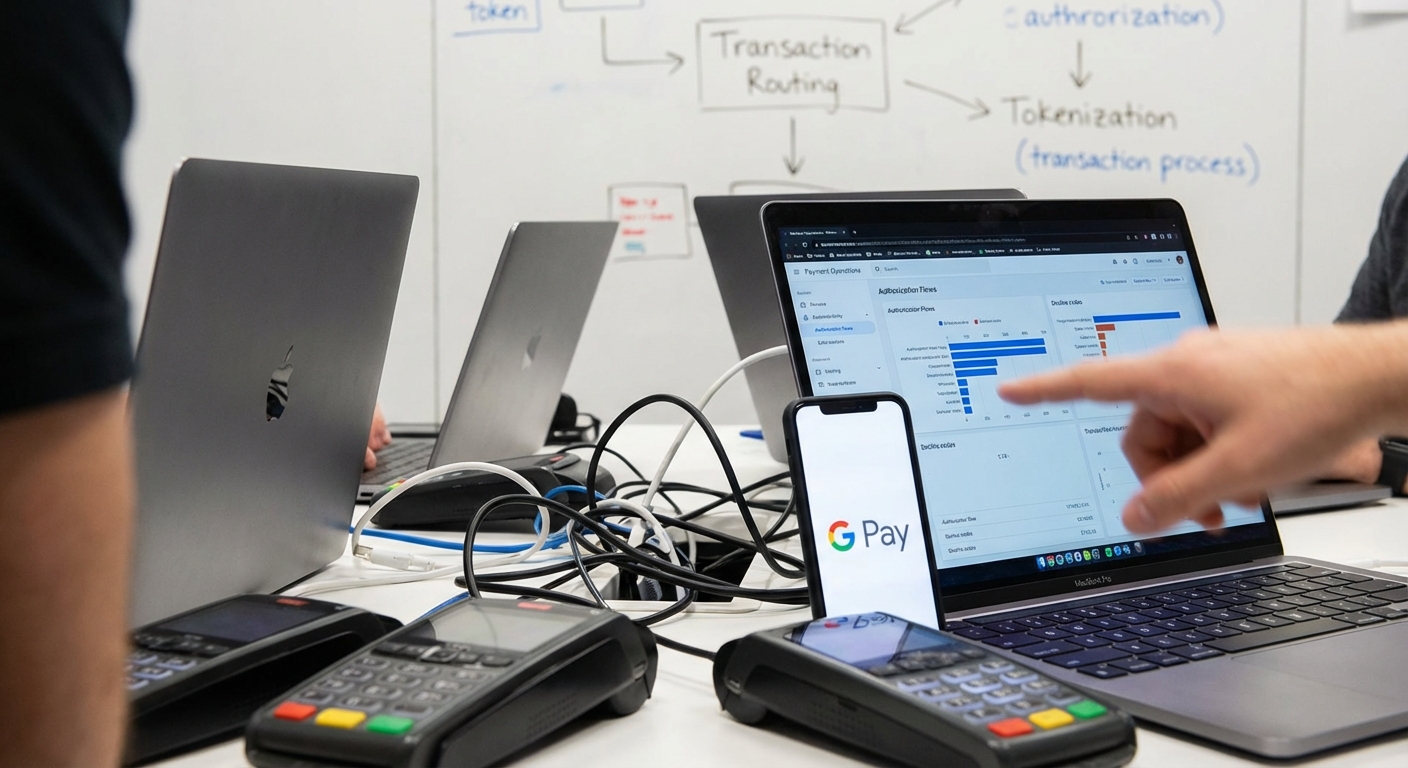
A digital wallet is a software application that securely stores users’ payment information, passwords, and digital assets for various transactions. It acts as an intermediary interface between consumers and merchants, replacing raw primary account numbers with secure tokens during checkout. By consolidating credentials, it creates a fast and secure payment experience across both physical and digital environments.
At its core, a digital wallet digitizes traditional payment cards and bank accounts to facilitate seamless electronic transactions. Within the payment lifecycle, it sits at the very beginning of the checkout experience, converting user intent into tokenized data that passes through gateways and card networks. Operationally, these wallets matter because their tokenized, biometric nature bypasses many common payment failures, significantly boosting security while directly increasing a merchant’s overall transaction approval rate.
What is a digital wallet in payment systems?
For a merchant or payment engineer, a digital wallet is essentially a secure credential container. Instead of asking a user to type out a sixteen-digit credit card number, expiration date, and security code, the merchant requests payment directly from the wallet application.
Familiar examples include Apple Pay, Google Pay, and PayPal. When a user adds a physical credit or debit card to one of these services, the physical card is converted into a digital equivalent.
This conversion process relies heavily on card network infrastructure. The wallet provider coordinates with the issuing bank and card network to generate a unique digital identifier, often called a Device Primary Account Number or DPAN. This token is useless to bad actors if intercepted, making the underlying infrastructure highly secure.
How does a digital wallet transaction work?
Understanding the underlying mechanics helps payment teams troubleshoot checkout issues and optimize their integrations. When a customer uses a wallet, the interaction typically follows a precise sequence.
- Initiation: The customer selects the wallet option on the merchant’s payment page or taps their device at a physical point-of-sale terminal.
- Authentication: The user authenticates the purchase locally on their device, usually through biometrics like a fingerprint or facial recognition.
- Data Exchange: The wallet transmits a secure payload to the merchant, which includes the tokenized card data and a unique, single-use cryptogram.
- Authorization: The merchant forwards this payload to their payment provider to begin standard payment authorization.
- Issuer Decision: The issuer receives the request, validates the cryptogram, checks the account balance, and returns an approval or a specific issuer response indicating why the transaction was approved or denied.
Because the user is strongly authenticated before the authorization request even leaves the device, issuers treat these transactions with a high degree of trust.
Where do digital wallets appear in payment flows?
Wallets sit at the very front of the payment lifecycle. They function as the entry point for cardholder data, dictating how information enters the merchant’s system.
In card-not-present scenarios, wallets help bypass tedious manual data entry. The browser or mobile operating system passes the token directly to the checkout form. In card-present flows, Near Field Communication technology bridges the gap between the mobile device and the merchant’s payment terminal.
Once the tokenized data enters the merchant’s payment gateway, the rest of the lifecycle behaves much like a traditional card transaction. The network routes the data, the issuer processes it, and the funds eventually settle into the merchant’s acquiring account.
Why do digital wallets matter for payment optimization?
Supporting wallets is no longer just about offering a modern user experience. It is a critical component of payment optimization and revenue protection.
First, wallets drastically reduce friction at checkout. When customers do not have to hunt for their physical wallets, cart abandonment drops. Second, the biometric authentication step inherently satisfies stringent security requirements in regions like Europe, reducing the chance of a transaction declined for suspected fraud.
Additionally, network tokens used in these wallets often update automatically. If a customer loses their physical card and the bank issues a new one, the token in the digital wallet usually remains valid. This prevents widespread payment issues for merchants who rely on returning customers saving their preferred payment methods.
How do digital wallets impact payment declines and retries?
Even with the advanced security of tokenized wallets, merchants still face payment failures. A digital wallet secures the credential, but it cannot prevent a card declined due to declines or restrictive velocity limits placed by the cardholder’s bank.
When a payment declined message occurs, the merchant must decide how to react. For soft declines, such as temporary network timeouts or minor issuer rule violations, retrying the transaction can often save the sale.
This is where intelligent infrastructure becomes necessary. Platforms like SmartRetry help merchants navigate these payment issues by optimizing the timing and routing of retry attempts. By understanding the specific issuer response and the nature of the wallet token, systems can retry failed payments at the optimal moment, successfully executing payment recovery without frustrating the customer.
Handling these declines correctly is especially important for merchants managing recurring billing. Resolving subscription payment issues tied to digital wallets requires careful logic to ensure tokens are billed correctly on subsequent attempts, maximizing revenue retention.
Digital wallet vs. mobile wallet: What is the difference?
These terms are frequently used interchangeably, but there is a slight operational distinction in the payments industry.
A digital wallet is the broader category. It includes any application or online service that stores payment credentials. A user can access a digital wallet like PayPal or Amazon Pay from a desktop computer, a tablet, or a smartphone browser.
A mobile wallet is a specific type of digital wallet that lives natively on a mobile device. Apple Pay, Samsung Pay, and Google Pay are primary examples. They leverage the specific hardware of the phone, such as the secure element chip and the Near Field Communication antenna, to facilitate tap-to-pay transactions in physical stores.
For merchants, supporting both ensures maximum demographic coverage. This drives up conversion rates and minimizes friction across every possible shopping channel.