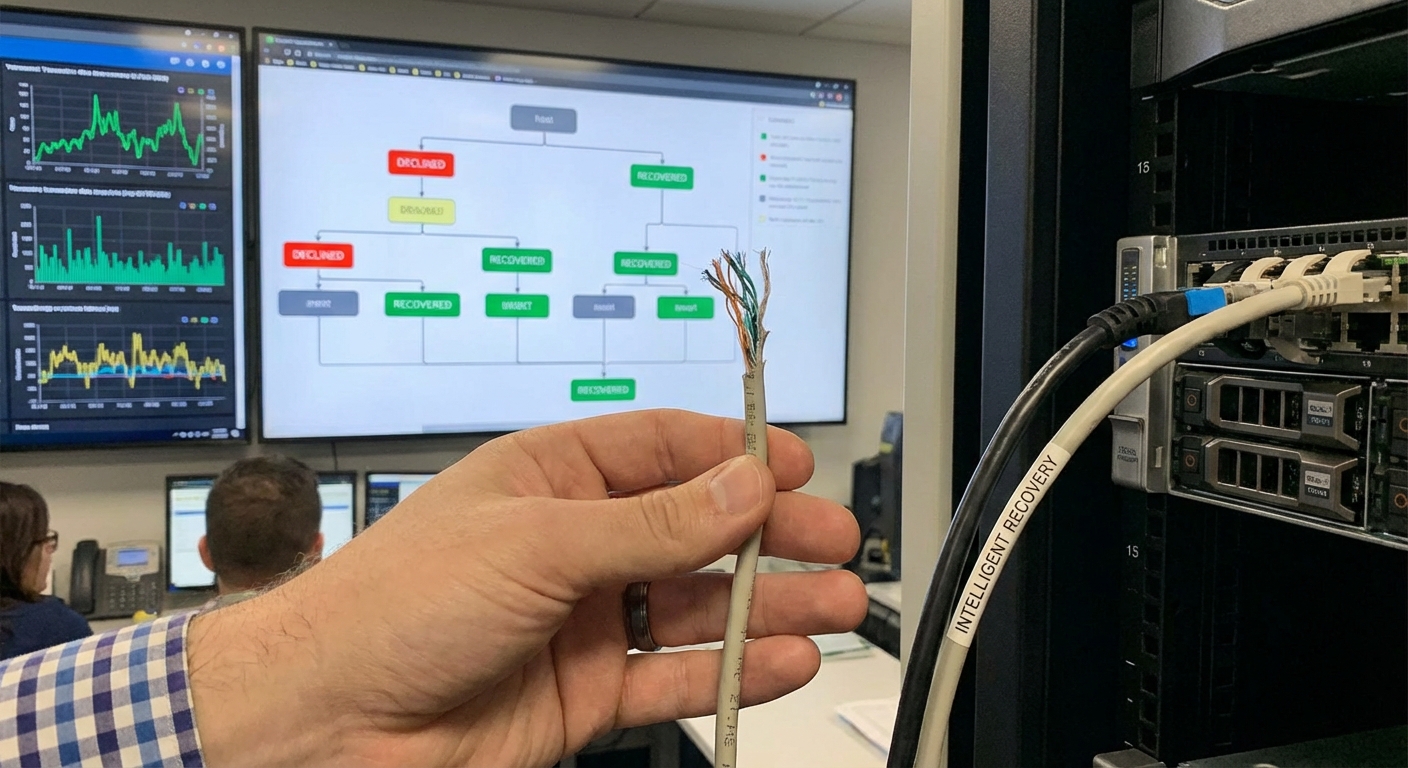
Expiry Date is the four-digit month and year assigned to a payment card indicating when the credential officially becomes invalid for new transactions. It functions as a standard security parameter during the authorization process to verify that the payment method is currently active. Transactions attempted after this date will automatically result in a declined authorization.
The expiry date is a time-bound security attribute that dictates the operational lifespan of a primary account number. It appears directly within the payment processing flow during the authorization request, allowing the issuing bank to validate the status of the credential. Operationally, managing these dates is crucial because outdated information frequently causes a payment decline, directly threatening revenue for subscription-based businesses.
What is the role of an expiry date in payment processing?
An expiry date serves as a mandatory data point for virtually all card-based electronic payments. Alongside the primary account number and the card verification value, the expiration date acts as a core credential component required to initiate a transaction.
In card-present environments, the point-of-sale terminal reads this date directly from the card’s EMV chip or magnetic stripe. In card-not-present flows, the customer must manually input the month and year during checkout. The date dictates the final day of the specified month that the card can be successfully authorized by the card network.
Beyond basic validation, this time limit provides a natural mechanism for issuing banks to reissue physical cards. This periodic reissuance allows banks to deploy updated payment technology, such as contactless chips, while replacing plastics that suffer from physical wear and tear.
How is the expiry date validated during payment authorization?
The validation of an expiry date happens in milliseconds but involves multiple parties. When a customer initiates a purchase, the payment gateway captures the credential details. The process then follows a specific sequence.
- The gateway packages the card number, transaction amount, and expiry date into an authorization request.
- The acquiring bank forwards this payload through the respective gateway to the issuing bank.
- The issuing bank receives the request and cross-references the submitted expiry date against its internal system of record.
- If the date matches and has not yet passed, the issuer proceeds to check available funds and fraud risk factors.
- If the date is mismatched or in the past, the issuer immediately halts the check and returns a decline code.
This sequential validation ensures that outdated or syntactically incorrect credentials are rejected before the issuer wastes computational resources on deeper fraud analysis.
Why do expired cards cause subscription payment issues?
In a standard e-commerce checkout, an expired card is a minor friction point. The customer simply notices the error, reaches for a new card, and completes the purchase. However, the dynamics change entirely for recurring billing and card-on-file models.
When a merchant securely stores a customer profile, they store the expiration date associated with that specific point in time. Physical cards typically expire every three to five years. When the bank issues a replacement card, the primary account number usually remains identical, but the expiration date and verification value change.
If a merchant attempts to process the next billing cycle using the stored, outdated credential, the transaction will fail. For businesses relying on recurring revenue, this scenario creates significant subscription payment issues. The customer has not actively canceled their service, yet the business cannot collect the owed funds.
What happens during an expiry-related issuer response?
When an issuer declines a transaction due to an expiration mismatch, they return a specific standardized response code. The most common network response for this scenario is Code 54, indicating an expired card.
Receiving this specific issuer response provides a clear signal to the merchant’s payment team. Unlike generic decline codes that might be related to insufficient funds or suspected fraud, an expiration decline points to a purely mechanical data error.
Blindly attempting to process the exact same payload again will result in another transaction declined message. Repeatedly hitting the network with a known expired credential can negatively impact a merchant’s standing with card networks, potentially leading to authorization penalties or increased processing fees.
How can merchants reduce payment declines tied to expiry dates?
Proactive credential management is the most effective way to handle aging payment methods. Many payment service providers offer integration with account updater services provided by major card networks. These services automatically check for updated card details in the background, allowing the merchant to update the expiration date in their vault before the next billing cycle occurs.
When an update service is not available, having a sophisticated strategy for handling declines becomes critical. Platforms like SmartRetry act as a contextual example of a platform focused on payment optimization and retry logic, helping merchants recover revenue and improve transaction approval rates.
Instead of treating all declines equally, an intelligent system reads the specific network response. If the code indicates an expired card, the system will not immediately retry failed payments. Instead, it might trigger an automated customer outreach email requesting updated billing details, reserving network retries for soft decline like temporary network timeouts.
Expiry dates vs network tokens
The traditional concept of an expiry date is heavily tied to the physical card model. As digital payments have matured, the industry has shifted toward network tokens to solve the friction caused by expiring credentials.
A network token replaces the primary account number with a unique digital identifier tied to a specific merchant. The major difference is that a network token does not possess a static, merchant-facing expiration date. The card network and the issuing bank manage the lifecycle of the underlying funding source behind the scenes.
When the customer’s physical card expires and a new one is issued, the issuing bank automatically updates the token mapping on their end. The merchant continues charging the same network token without ever needing to request or update a new expiry date. This effectively eliminates expiration-related declines from the payment processing flow.