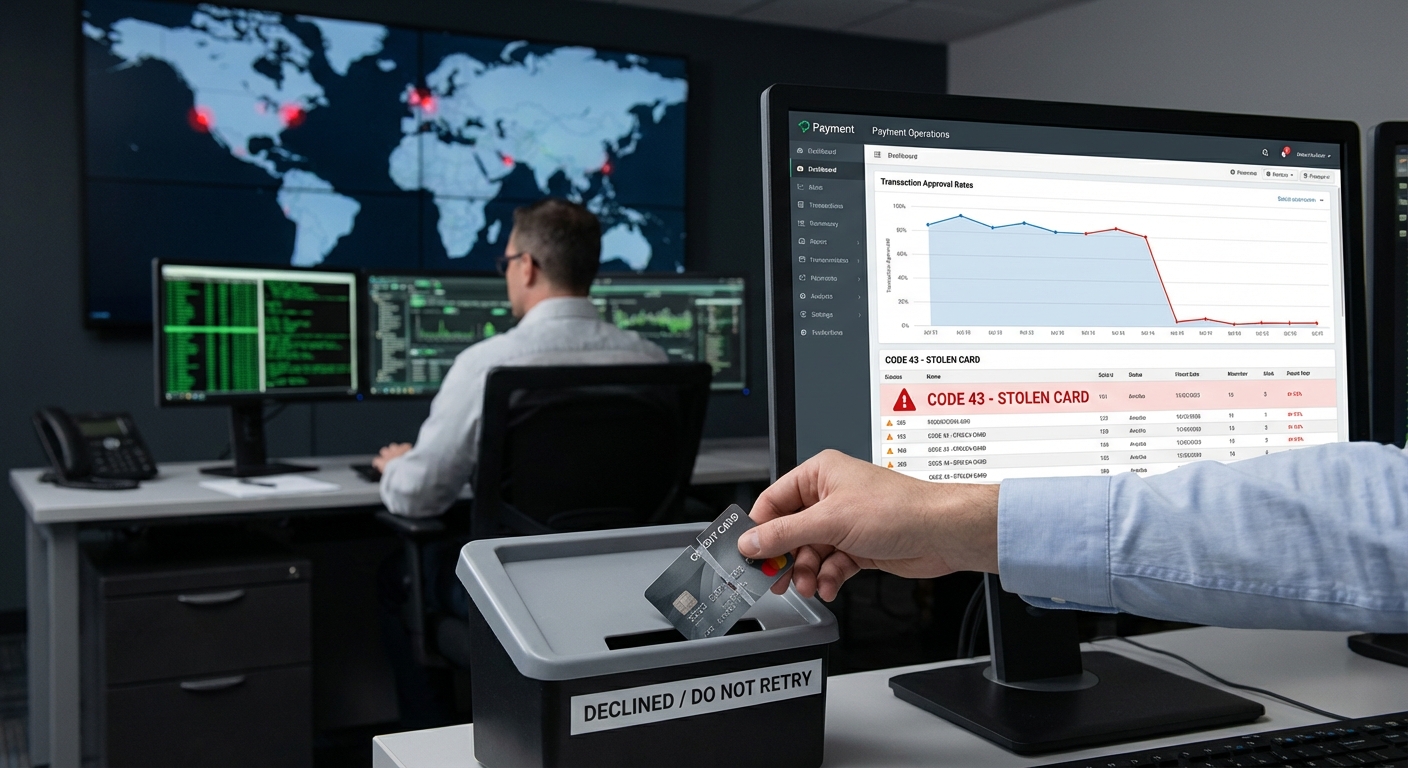
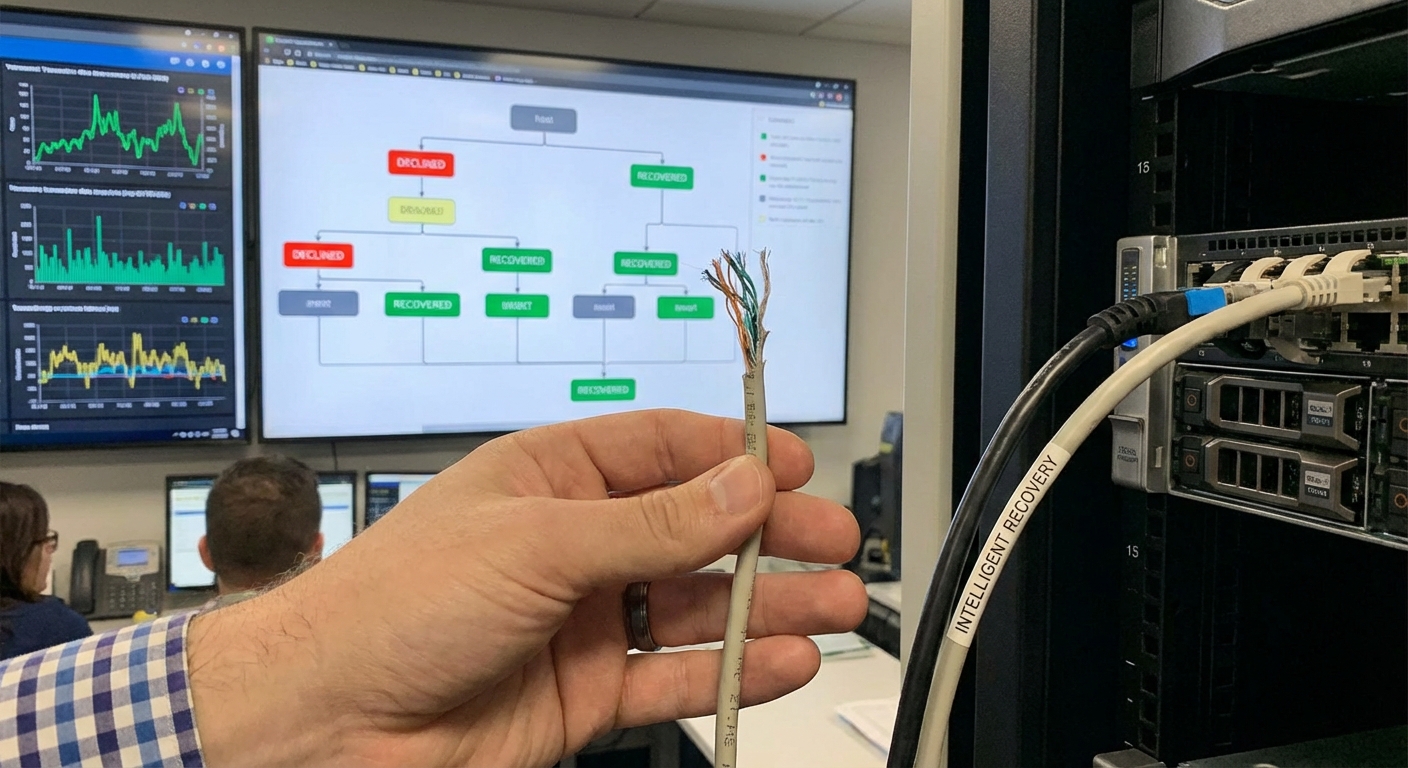
Failover is the automated process of redirecting a transaction to a secondary payment processor or gateway when the primary system experiences an outage, timeout, or technical failure. This routing mechanism ensures continuous system availability by instantly switching traffic to a backup provider. Merchants rely on this capability to prevent infrastructure problems from disrupting the customer checkout experience.
Failover acts as a critical safety net that activates when a primary payment infrastructure goes offline or degrades in performance. It occurs early in the transaction lifecycle, typically at the orchestration layer, before the transaction reaches the card networks. This mechanism protects merchants from revenue loss and sudden payment failures by seamlessly routing requests to a functional backup processor.
What triggers a failover in payment systems?
Payment infrastructure is highly complex and involves multiple hops between gateways, acquirers, networks, and issuing banks. When a merchant sends a transaction for processing, the primary provider may occasionally fail to respond.
A failover is usually triggered by technical payment issues rather than customer-related errors. Common triggers include API timeouts, gateway maintenance windows, DNS resolution errors, or internal server errors at the acquiring bank.
When the primary connection breaks, the system needs a way to save the transaction. Without a failover mechanism, the shopper would experience checkout issues and receive a generic error message. By automatically detecting the technical drop, the merchant’s Payment Decline Codes can switch to an alternate path.
How does the failover process work?
Modern payment stacks use dynamic routing to evaluate the health of different processor connections in real time. When a transaction initiates, the routing engine follows a predefined sequence to ensure the highest chance of success.
Here is a step-by-step look at how a standard failover functions:
- Initiation: The customer submits their payment details on the checkout page.
- Primary routing: The payment orchestrator sends the transaction data to the primary acquirer.
- Failure detection: The primary acquirer’s API returns a 5xx server error or fails to respond within the designated timeout window.
- Redirection: The orchestrator halts the failed attempt and immediately sends the identical transaction payload to a secondary, pre-configured backup acquirer.
- Completion: The secondary acquirer successfully processes the payment authorization and returns an approval code to the merchant.
This entire sequence happens in milliseconds. From the perspective of the customer, the checkout simply takes a fraction of a second longer to load.
Where does failover appear in the payment processing flow?
Failover operates primarily at the gateway or orchestration layer. This is the point where a merchant’s internal systems connect to the external financial ecosystem.
For failover to work effectively across different providers, the merchant generally must utilize network tokenization or an independent third-party token vault. Because raw card data cannot easily be passed between competing payment processors, a tokenization allows the orchestrator to route the same secure credential to processor A or processor B without friction.
It is important to note that failover happens before the issuing bank makes a financial decision. If the connection reaches the issuer and the issuer returns a hard rejection, the gateway has done its job. The infrastructure did not fail, but the payment declined based on the cardholder’s account status.
Why does failover matter for merchants?
Downtime directly translates to lost revenue. If a primary processor goes down for even fifteen minutes during a peak sales event, the resulting drop in authorizations can cost a merchant thousands of dollars.
Implementing a robust failover strategy protects the overall transaction approval rate. It ensures that temporary technical glitches do not artificially inflate decline metrics or block legitimate customers from completing their purchases.
Beyond immediate revenue protection, failover helps maintain consumer trust. Shoppers easily become frustrated by unexpected checkout issues. If a card fails to process due to a silent backend error, the customer may abandon the cart entirely and purchase from a competitor.
Failover vs. intelligent retries
While both concepts help merchants capture more revenue, they solve entirely different problems within the payment lifecycle. Understanding the distinction is vital for effective payment optimization.
Failover addresses infrastructure problems. It activates when the connection to the processor breaks, meaning the transaction never actually reached the bank for a decision. The goal is simply to find a working pipe to send the transaction through.
Intelligent retries address financial declines. This occurs when the transaction successfully travels through the processor and reaches the issuer, but the issuer denies the request. The bank might indicate insufficient funds, suspected fraud, or a generic response. In these cases, a transaction declined status is a valid financial response rather than a technical error. See Decline Code 51 for details on how intelligent retries recover revenue.
To handle these issuer rejections, merchants use platforms like SmartRetry. These platforms focus on payment recovery by analyzing the specific issuer response and determining the optimal time to retry failed payments. This approach is highly effective for reducing subscription payment issues and capturing revenue that would otherwise be lost to a card declined status.
Together, failover and intelligent retry logic form a complete defense. Failover ensures the transaction successfully reaches the bank, while intelligent retries step in to rescue the transaction if the bank initially says no. Both mechanisms are necessary to systematically reduce payment declines and maximize processing efficiency.