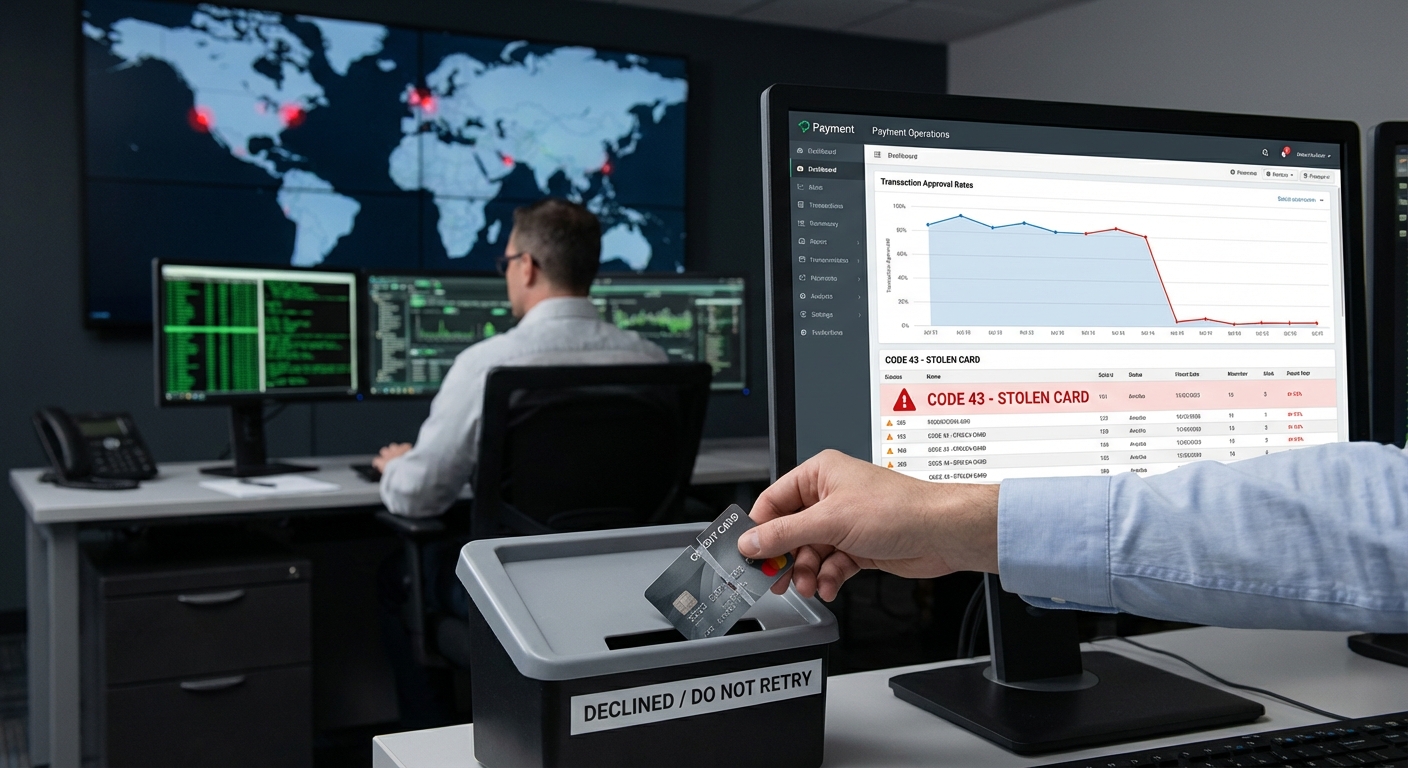
A velocity check is a risk management mechanism used in payment processing to monitor and limit the number or total value of transactions attempted within a specific timeframe. Merchants, payment merchant, and issuing banks deploy these checks to identify anomalous behavior patterns indicative of fraud or system errors. When limits are exceeded, subsequent attempts are automatically blocked or flagged.
AI Executive Summary
A velocity check functions as a speed limit for transactions, analyzing the frequency and volume of payment attempts linked to a specific user, card, or IP address. It appears primarily during the payment authorization, acting as a gatekeeper before a transaction reaches the card network or final issuer. Operationally, it prevents large-scale fraud attacks and card testing, but poorly configured velocity rules can trigger payment issues that block legitimate customers and reduce the overall approval rate.
What is a velocity check?
In the context of a payment processing flow, a velocity check acts as a behavioral filter. Instead of just looking at whether a credit card number is valid or if an account has sufficient funds, it evaluates the rate of activity.
It asks a simple question: “Is this customer, IP address, or device attempting to do too much, too quickly?”
For example, a normal customer might make one or two purchase attempts during a session. A fraudster running a script might attempt hundreds of small transactions in a single minute to see which stolen card numbers are active. Velocity checks identify that unnatural speed and stop it, preventing a wave of checkout issues and subsequent decline.
How do velocity checks operate during payment authorization?
Velocity rules evaluate real time data points the moment a customer clicks the checkout button. The system temporarily pauses the transaction to compare current behavior against historical limits.
A standard velocity check follows a specific sequence of actions:
- Data aggregation: The system identifies common data attributes in the incoming transaction, such as the billing address, device ID, IP address, or primary account number.
- Timeframe evaluation: The system counts how many times those exact attributes have appeared within a rolling time window, such as the last ten minutes or 24 hours.
- Threshold comparison: The system checks if the count exceeds the predefined limit established by the merchant or processor.
- Decisioning: If the limit is breached, the system declines the transaction before it reaches the card network. If it is within normal limits, the transaction proceeds to the issuer.
When a payment fails due to velocity limits, the resulting issuer response or gateway message often categorizes it generically as a risk decline.
Where are velocity rules enforced?
Payment failures related to velocity do not happen in just one place. Multiple entities in the payment chain use their own distinct velocity checks to protect their infrastructure.
The merchant and fraud provider layer
Merchants often set their own velocity limits within their internal fraud prevention software. A subscription business, for instance, might restrict a single user account from adding more than three new payment methods in one hour. This prevents bad actors from using the merchant site as a low risk testing ground for stolen cards.
The payment gateway layer
Gateways and payment service processors enforce velocity checks to protect their own network standing. If a gateway allows thousands of rapid, fraudulent authorization requests to pass through to the networks, they face severe financial penalties. Processor level checks often monitor aggregated IP traffic or merchant level transaction spikes.
The issuing bank layer
Issuers have the ultimate say in the transaction lifecycle. They monitor the cardholder’s historical spending habits across all merchants. If a card is suddenly used at five different online stores within ten minutes, the issuer will flag the anomaly. This often results in a transaction declined status to protect the cardholder from an account takeover.
Why do velocity checks matter for merchants?
Finding the right balance with velocity rules is a major operational challenge. If a merchant sets the rules too loose, they become a target for card testing attacks and face high authorization costs. If they set the rules too tight, they block legitimate buyers.
False positives are a significant problem for e-commerce brands. A legitimate customer might experience a card declined event due to a simple typo in their postal code. If they try to correct the mistake and submit the payment three more times in rapid succession, a strict velocity check will lock them out entirely.
This scenario creates frustrating checkout issues for the customer and results in lost revenue for the merchant. Optimizing these rules requires continuous monitoring of authorization rates and customer purchasing patterns to ensure good transactions pass through without friction.
How do velocity limits impact payment recovery?
Velocity limits play a critical role when a merchant attempts to recover lost revenue from involuntary churn or temporary network errors. When a legitimate transaction fails, a system’s natural instinct is often to try it again immediately.
However, aggressive or immediate retries can easily trigger a processor or issuer velocity check. If a billing system automatically retries a failed transaction every hour, the issuer’s risk systems will flag that repeated cadence as suspicious. This leads to a hard decline, permanently killing the chance of recovery.
Platforms like Smart Retry, which focus on payment optimization and intelligent retries of declined payment transactions, help merchants navigate these invisible speed limits. By strategically spacing out retry attempts and analyzing the initial decline reasons, these platforms avoid tripping issuer velocity thresholds. This intelligent spacing helps merchants safely retry failed payments and improve their overall transaction approval rate.
Velocity checks vs traditional static checks
Understanding the difference between behavioral checks and static checks helps clarify how modern fraud systems layer their defenses.
Static data checks
Mechanisms like the Address Verification Service or Card Verification Value checks evaluate static data. They look at the payment request and ask if the data provided matches the data on file with the issuing bank. They do not care about timeframes or previous attempts. A mismatched postal code will trigger a decline whether it is the first attempt or the fiftieth.
Behavioral velocity checks
Velocity limits evaluate behavior over time. The data itself might be perfectly valid, with a correct address and a correct security code. The payment authorization is blocked purely because of the frequency of the requests. This behavioral layer is essential for mitigating modern, automated payment attacks that easily bypass basic static data requirements.
By combining static data validation with intelligent velocity monitoring, payment teams can effectively reduce false declines while maintaining a smooth checkout experience for genuine customers.