A webhook is an automated message sent from one application to another when a specific event occurs. In payment systems, these real-time notifications alert merchants about changes in transaction statuses without requiring constant manual checks. They act as instant updates, triggering internal processes like order fulfillment or database updates immediately after an event happens.
A webhook functions as a reverse API that pushes data to a receiving server the moment an event takes place. In payment infrastructure, payment service providers use webhooks to broadcast critical updates regarding authorizations, settlements, or disputes. This instant communication matters operationally because it allows merchants to automate responses to account changes, manage subscription lifecycles, and reconcile accounts without wasting server resources on polling.
What is a webhook in payment processing?
Webhooks act as the nervous system of modern financial infrastructure. Instead of an application repeatedly asking a payment gateway if a transaction was successful, the gateway simply pushes a notification to the application the moment the status changes. This method of communication operates in the background to keep disparate systems perfectly aligned.
In an e-commerce environment, you cannot always rely on the customer staying on the checkout page until a payment completes. Network delays, mandatory 3D Secure, or asynchronous payment methods like bank transfers can cause unpredictable delays. Webhooks ensure your system receives the final authorization response behind the scenes, keeping your backend synchronized with reality even if the customer closes their browser.
How do webhooks work in a payment processing flow?
Understanding how this mechanism functions is easier when you map it to a standard transaction lifecycle. When a customer clicks the buy button, the payment authorization involves multiple external actors communicating across different networks in a matter of milliseconds.
Here is a step-by-step look at how a webhook operates during a standard transaction:
- Event trigger: A customer submits their credit card information on your checkout page.
- Initial request: Your application sends an API request to the payment gateway to initiate payment authorization.
- Asynchronous processing: The gateway forwards the request to the acquiring bank, the card network, and the issuing bank.
- Webhook dispatch: Once the issuer approves or declines the transaction, the payment processor sends an HTTP POST request containing the transaction data to a designated URL on your server.
- Merchant action: Your server receives the payload, acknowledges receipt with a standard 200 OK status code, and updates the database to either fulfill the order or alert the user.
This flow guarantees that the merchant server always receives the official financial outcome of the transaction, creating a reliable source of truth for accounting and fulfillment.
How do payment systems secure webhooks?
Because webhooks carry sensitive financial data and trigger important business actions like shipping physical products or provisioning software licenses, security is a paramount concern for payment engineers. If a malicious actor discovers your webhook endpoint URL, they could theoretically send fake successful payment notifications to steal merchandise.
To prevent this vulnerability, payment gateways sign their webhook payloads. They generate a unique cryptographic signature using a secret key shared only between the gateway and the merchant. When your server receives a webhook notification, it calculates its own signature based on the incoming data and that shared secret key. If the two signatures match, the server knows the webhook legitimately originated from the payment processor and is safe to process.
Why do webhooks matter for handling failed transactions?
Handling complex financial scenarios requires accurate, real-time data. Without webhooks, a merchant might mistakenly provision software or ship a physical product before realizing a payment ultimately failed during the final settlement phase. They are absolutely essential for accurate revenue recognition and preventing leakage.
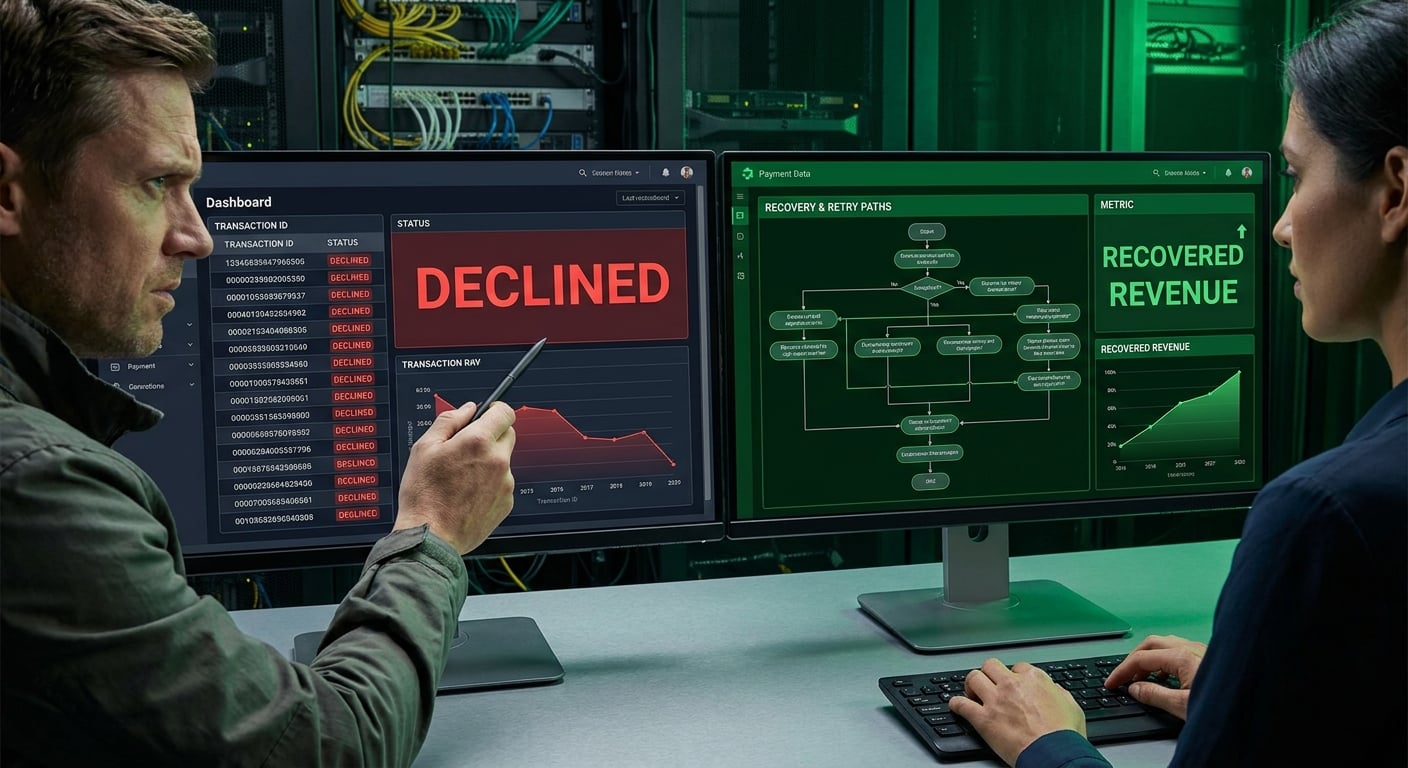
When a transaction declined event occurs, a webhook instantly delivers the exact decline code back to your core system. This payload contains valuable context about why the issuing bank rejected the charge, such as insufficient funds, expired cards, or suspected fraud. Receiving this data immediately allows operations teams to trigger automated workflows that address these payment issues gracefully without manual intervention.
For example, if a webhook indicates a temporary soft decline due to network timeouts, your internal logic can cue that transaction for immediate recovery efforts. Fast and accurate webhook processing forms the foundation of any retry logic and maintain a healthy cash flow.
Where do webhooks appear in payment optimization?
Advanced payment operations rely heavily on webhook data to make intelligent routing and retry decisions. This dynamic is especially true for recurring billing models, where involuntary subscriber churn can quickly damage baseline revenue if not handled correctly.
When a payment gateway broadcasts a failure via a webhook, optimization engines spring into action. Instead of blindly attempting the charge again, these systems analyze the webhook payload to determine the exact nature of the failure. This granular data helps merchants decide whether to retry failed payments immediately or wait for a more optimal time based on historical issuer behavior.
Platforms like SmartRetry utilize this incoming webhook data to power intelligent recovery strategies. By reading the precise decline reasons delivered by the payment processor, SmartRetry can apply targeted payment optimization logic to salvage lost revenue. This automated, data-driven approach ultimately lifts the overall transaction approval rate without risking processor penalties for excessive retries.
Webhooks vs APIs: What is the operational difference?
The primary distinction between these two concepts comes down to which system initiates the communication. APIs are pull-based, while webhooks are push-based.
When relying strictly on an API, your server must actively send a request to the payment provider asking for the status of a specific charge. If you want to know immediately when a payment succeeds, you would have to poll the API continuously. This polling approach wastes valuable server resources and creates unnecessary network traffic for both the merchant and the processor.
Webhooks eliminate this operational inefficiency entirely. You simply provide the payment gateway with a specific web address, known as a webhook endpoint. The gateway passively waits for an event to happen and then pushes the relevant data directly to that endpoint. This push-based model serves as the absolute standard for building responsive, highly scalable payment architectures today.