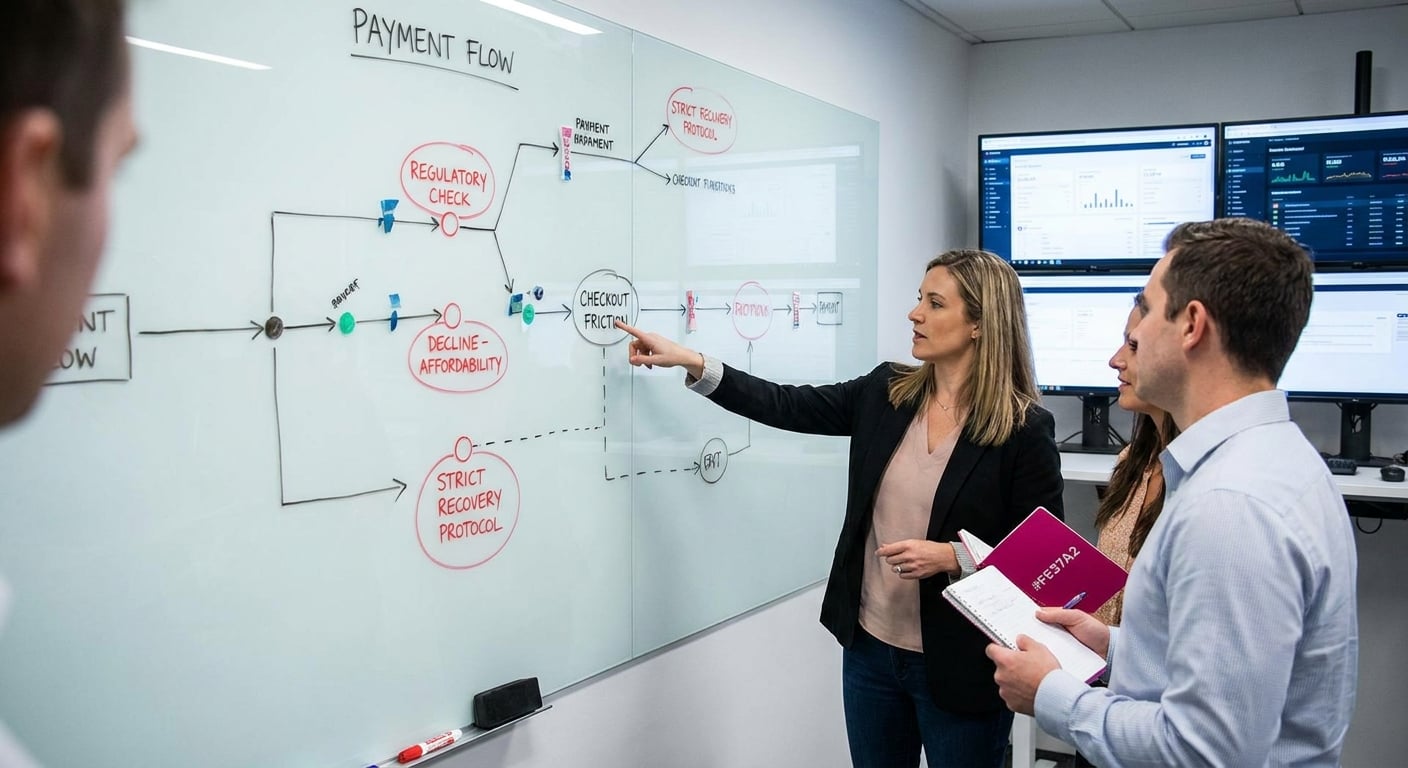
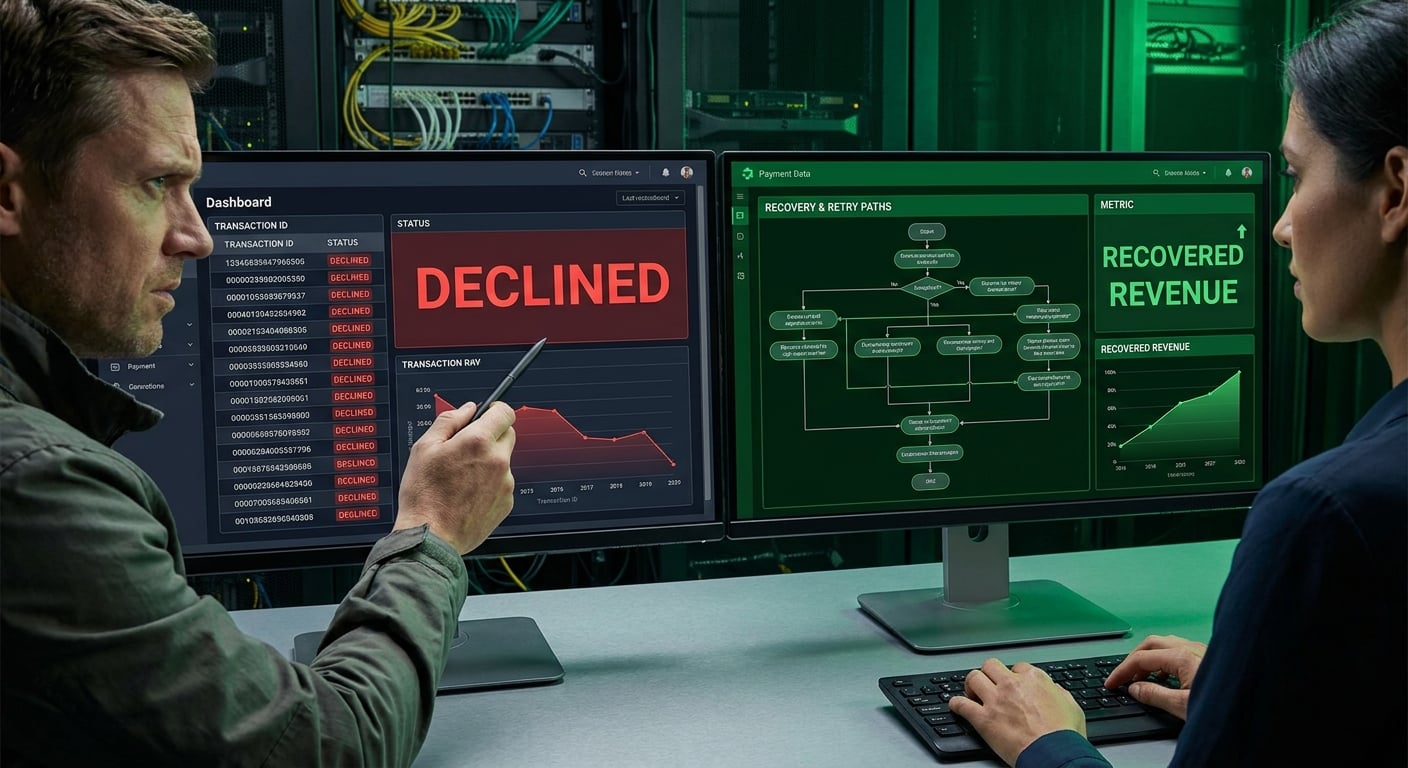
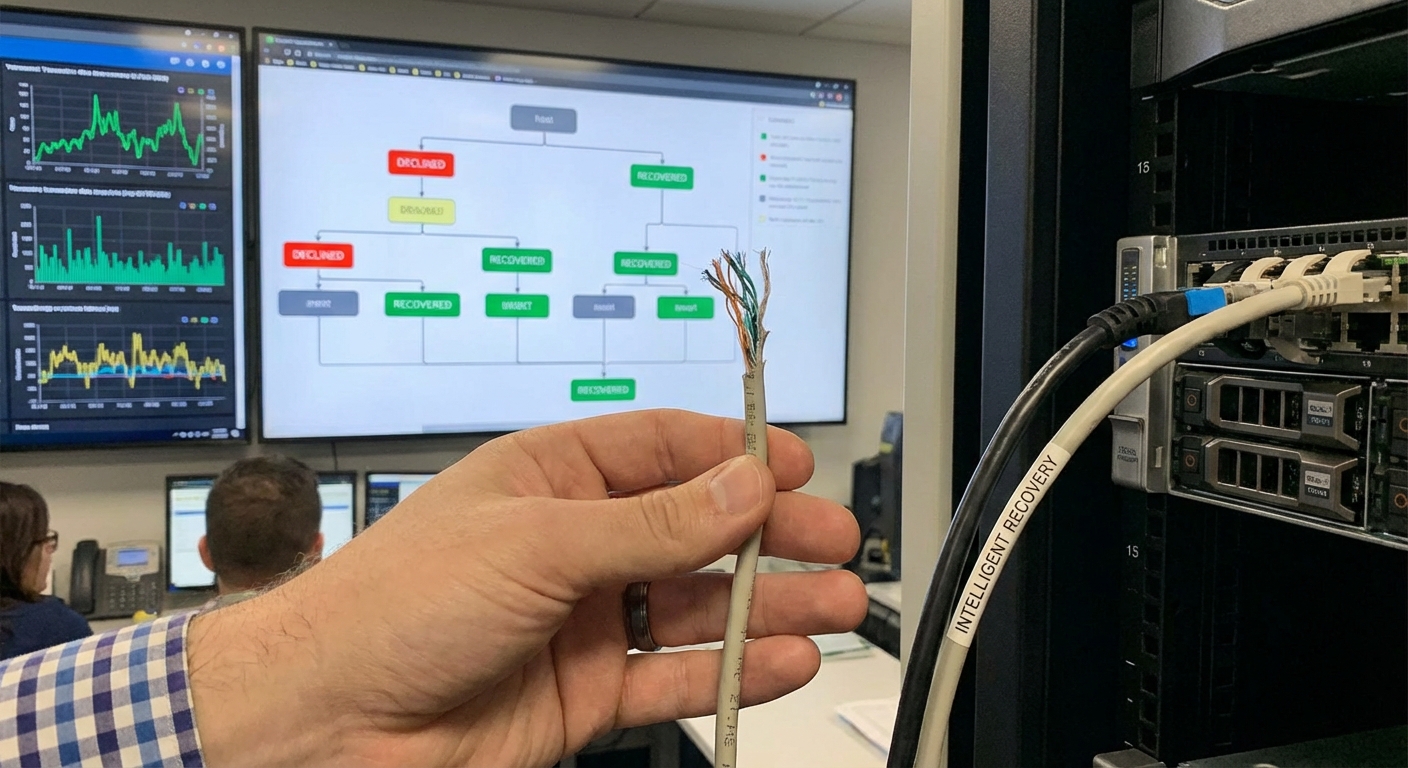
Cascading is a payment routing strategy where a declined transaction is automatically forwarded to an alternative payment processor or acquirer bank to attempt a successful authorization. This technique relies on a multi-acquirer setup to provide immediate backup options during checkout issues. When the primary provider rejects the payment, the system seamlessly redirects the request to a secondary provider.
Cascading functions as a real-time safety net that redirects a failed payment attempt to a backup provider before the customer even knows a problem occurred. This mechanism appears within the payment gateway immediately after an initial processor or processor acquirer rejects the transaction. Operationally, this strategy helps merchants minimize revenue loss from payment declines, maintain high transaction approval rates, and build resilience against unexpected payment system outages.
What is cascading in payment processing?
When a customer submits an online order, the merchant sends the transaction details to a payment service provider. If that provider or their acquiring bank declines the request, the transaction typically fails. Cascading changes this outcome by introducing an automated chain of backup options.
Instead of immediately showing a payment declined error to the customer, the merchant payment gateway automatically reroutes the exact same payment credentials to a second provider. If that second provider also declines the charge, the system might cascade the transaction to a third. The primary goal is to find a processing pathway that results in an approved transaction without requiring the customer to re-enter their card details.
How does a cascaded payment processing flow work?
Understanding how cascading works requires looking at the milliseconds between a customer submitting their order and seeing a success screen. The process follows a specific, automated logical sequence.
- Step 1: The customer submits their payment details on the checkout page.
- Step 2: The primary payment processor routes the request to the acquiring bank, which forwards it to the issuer bank for a payment authorization.
- Step 3: The issuer or the primary processor returns a negative issuer response, such as a generic decline or a suspected fraud flag.
- Step 4: The payment gateway intercepts this decline before it reaches the customer.
- Step 5: The gateway automatically strips the specific primary routing data and sends the core payment details to a secondary payment processor.
- Step 6: The secondary processor attempts a new authorization. If successful, the customer sees a confirmed order screen.
This entire sequence happens in the background. From the perspective of the buyer, the checkout process might simply take an extra second or two to complete.
Where does cascading fit into payment optimization?
Merchants use cascading primarily to reduce card declines and recover revenue that would otherwise be lost. Not all processors treat the same transaction equally. A primary processor might flag a perfectly legitimate cross-border transaction as risky, while a secondary processor with stronger regional acquiring relationships might approve it instantly.
This routing strategy also protects against technical payment failures. If a primary acquiring bank experiences an unexpected outage, cascading ensures that transactions flow seamlessly to a backup provider. This operational redundancy is crucial for high-volume merchants who cannot afford to lose sales due to third-party downtime.
When should a merchant cascade a transaction declined by an issuer?
Cascading is highly effective, but it is not a blanket solution for every transaction declined by a bank. Payment teams must configure their routing engines to cascade only when there is a realistic chance of approval.
Transactions rejected for hard decline reasons, such as insufficient funds, expired cards, or closed accounts, should never be cascaded. Sending a fundamentally invalid card to three different processors will just result in three declines and potentially flag the merchant for suspicious activity by the card network.
Instead, cascading targets soft declines. These include generic processor rejections, technical timeouts, or vague risk-based declines. By intelligently filtering which failures proceed to a secondary acquirer, merchants protect their standing with card networks while still rescuing legitimate orders.
Cascading vs intelligent retries: What is the difference?
While both concepts aim to rescue lost transactions, they operate differently within the payment lifecycle.
Cascading happens in real-time during the initial checkout experience. It reroutes the payment to a completely different processor or acquirer while the customer is still waiting on the screen. The focus is on finding a successful routing path immediately to prevent checkout issues.
Intelligent retries happen after the initial checkout session has definitively failed, often hours or days later. This technique is highly relevant for recurring billing or subscription payment issues. A platform like SmartRetry utilizes intelligent retries to analyze decline codes, time of day, and historical data to automatically retry failed payments at the optimal moment, improving revenue recovery without requiring real-time processor hopping.
Both mechanisms are essential tools for a comprehensive payment optimization strategy. Cascading handles immediate routing failures at checkout, while intelligent retries recover delayed or recurring payment failures over time.
What are the operational trade-offs of cascading?
Implementing a multi-processor routing system introduces complexity to a merchant payment stack. Managing multiple acquirer integrations requires robust technical resources, careful reconciliation processes, and unified reporting tools.
There are also cost considerations to evaluate. Secondary processors often charge higher transaction fees for cascaded volume because they recognize the traffic as inherently riskier or harder to place. Merchants must calculate whether the profit margin on the rescued sale outweighs the higher processing costs of the backup provider. For a deeper understanding of payment acceptance costs and strategies to improve approval rates, see merchant discount rate.
Additionally, excessive cascading can introduce latency to the checkout experience. If a payment cascades through three different processors before finally failing, the customer might wait several seconds, leading to frustration or cart abandonment. Payment engineers must carefully balance the desire for a higher transaction approval rate against the need for a fast, frictionless customer experience.