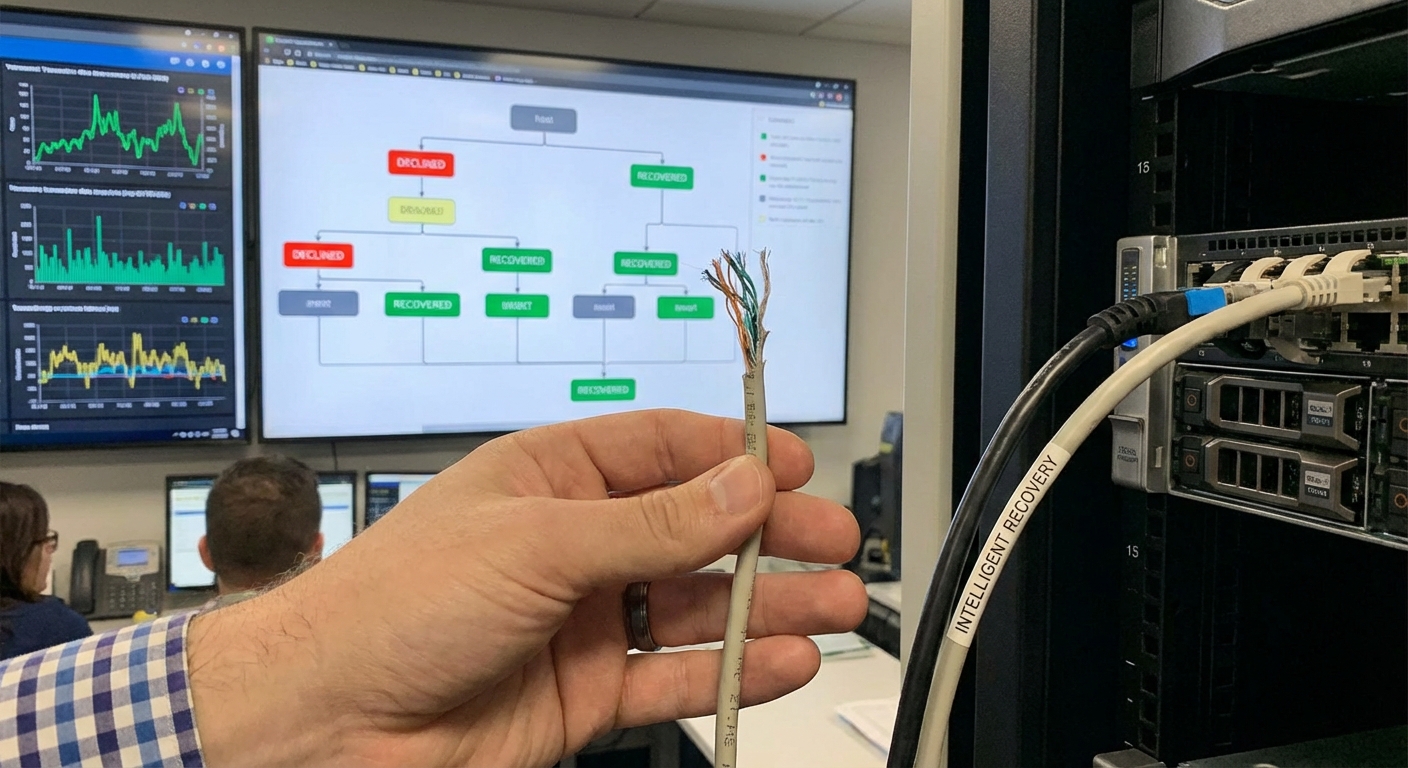
Retry logic is a systematic set of rules used by payment platforms to automatically reattempt a declined transaction. By analyzing decline codes and network parameters, this process determines the optimal time and method to submit the payment request again. Implementing these automated routines helps merchants recover lost revenue while avoiding excessive network penalty fees.
Retry logic is an automated mechanism that evaluates declined payments and intelligently resubmits them to the network to secure a successful authorization. It appears primarily in recurring billing flows and card-not-present environments after an issuing bank rejects an initial request. By applying data-driven reattempts, this process significantly improves the approval rate without requiring manual intervention from the merchant.
What is retry logic in payment environments?
When a customer submits an order, the transaction is not always approved on the first attempt. Network timeouts, insufficient funds, or overly strict fraud filters can cause legitimate transactions to fail. Retry logic is the programmatic decision-making engine that steps in immediately after these payment issues occur.
Instead of accepting the failure and canceling the order, the payment system evaluates the specific reason for the decline. The logic engine then decides if, when, and how to send the transaction through the network a second or third time.
This process is highly critical for digital businesses. Without a systematic way to handle a transaction declined by the bank, merchants leave a significant amount of money on the table. A well-constructed retry system works silently in the background, resolving checkout issues before the customer even realizes there was a problem.
How does retry logic evaluate a card declined event?
The core function of this logic relies on interpreting the exact issuer response. When an issuing bank declines a payment, it sends back a specific decline code. The retry engine categorizes this code to determine the next best action.
Payment systems generally divide these codes into two categories. Hard declines indicate a permanent issue, such as a stolen card or an invalid account number. Authorization Code 41 is a definitive lost-card decline, and retrying these is futile. Hard decline is an example where retrying provides no benefit. Soft declines indicate a temporary issue, such as insufficient funds, a temporary network outage, or a generic “do not honor” message. For example, decline code 51 represents insufficient funds and can often be recovered with smarter retry timing.
If the engine detects a hard decline, the logic dictates that the system should stop immediately. Retrying a hard decline violates card network rules and incurs unnecessary processing fees. If the engine detects a soft decline, it triggers a specific retry schedule tailored to that exact failure reason.
What is the step-by-step payment authorization flow?
To understand how the logic functions in a live environment, it helps to map out the exact lifecycle of a recovered transaction.
- Initial Submission: The merchant payment gateway sends the transaction data to the acquiring bank, which routes it through the network to the issuing bank.
- Issuer Rejection: The issuer denies the request due to a temporary issue and sends a soft decline code back through the payment processing flow.
- Logic Activation: The merchant payment system intercepts the decline code before notifying the customer and feeds it into the rules engine.
- Strategic Delay: The engine calculates the optimal waiting period. For example, it might wait 24 hours for an insufficient funds code, hoping the customer receives a direct deposit.
- Subsequent Reattempt: The system processes the transaction again using the identical payment details or updated network tokens.
- Successful Settlement: The issuer approves the new request, the merchant secures the revenue, and the system closes the recovery loop.
Where does this mechanism appear in the payment processing flow?
Automated retries are almost exclusively utilized in card-not-present transactions. In a physical retail environment, if a card fails at the terminal, the cashier simply asks the customer for another form of payment. There is no opportunity or need for the software to delay and retry the charge hours later.
However, in ecommerce and software-as-a-service business models, the merchant relies heavily on vaulted payment methods. This makes the logic essential for handling subscription payment issues. When a monthly billing cycle triggers thousands of transactions simultaneously, a portion of them will inevitably fail.
The logic engine sits at the orchestration layer or the payment gateway level. It intercepts the returning network messages and manages the queue of pending reattempts without disrupting the core business operations.
Why does retry logic matter for merchants?
The most immediate impact of a strong retry strategy is payment recovery. Every recovered decline represents pure revenue that would have otherwise required expensive customer support outreach or resulted in customer churn. By capturing this revenue automatically, merchants maximize the lifetime value of their customer base.
Beyond revenue generation, strict network compliance is a major operational factor. Major card networks like Visa and Mastercard enforce strict rules regarding payment failures. Merchants who aggressively and repeatedly retry failed payments without a logical framework face severe financial penalties. A smart logic engine protects the merchant by hard-coding network compliance directly into the automated rules.
Finally, managing these rules properly helps reduce payment declines over time. By tracking which retry timing patterns yield the highest success rates, payment teams can optimize their billing schedules to align with customer liquidity events, such as standard bi-weekly payday cycles.
How do basic systems compare to smart payment optimization?
Historically, merchants relied on basic, static retry schedules. A legacy billing system might simply retry every failed payment exactly three times, spaced exactly three days apart. While this catches some low-hanging fruit, it ignores the nuanced reasons behind the decline and often triggers network penalty fees for retrying unrecoverable cards.
Modern payment optimization requires a much more dynamic approach. Intelligent retry systems analyze historical data, network tokens, issuer behavior, and specific time-of-day success rates to craft customized recovery paths for every individual transaction.
Platforms like SmartRetry specialize in this exact intersection of payment optimization and intelligent retries of declined payment transactions. Instead of guessing when a card might work, advanced systems use data models to predict the precise moment an issuer is most likely to approve the request. This shift from static rules to intelligent routing helps merchants recover maximum revenue while maintaining healthy relationships with their payment processors.