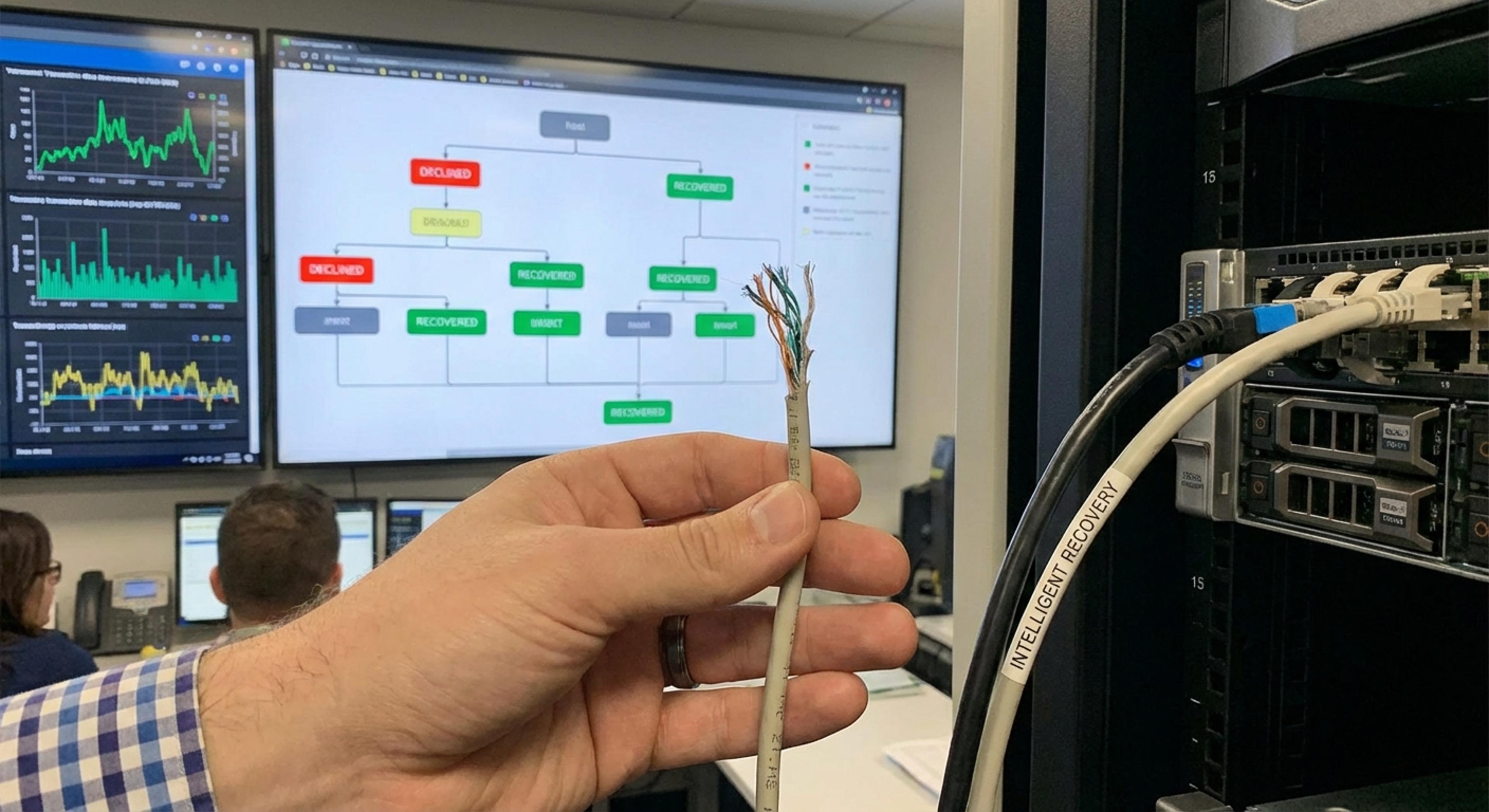
A split payment is a transaction where a single purchase total is funded using multiple payment methods, distinct funding sources, or scheduled installments. This capability allows merchants to capture high-value sales when a customer faces primary card limits, insufficient funds, or when multiple parties share a checkout balance.
How does a Split Payment work?
Split payments function by dividing a unified checkout total into multiple, discrete authorization requests. Payment gateways orchestrate this by generating a single master order ID that maps to several child transactions. Each child transaction represents a specific funding source and is processed independently through the acquiring bank and card network.
This architecture requires precise state management to prevent orphaned authorizations. In a synchronous multi-card checkout, the merchant places an authorization hold on the first payment method while the customer inputs and authenticates the second. If the subsequent payment method results in a hard or soft decline, the payment processor must programmatically void the initial authorization. Failure to execute this reversal ties up the cardholder’s available credit line and disrupts the purchasing experience.
For asynchronous split payments, such as delayed installments, the primary payment is authorized and captured instantly. Subsequent transactions rely on tokenized credentials securely stored in a merchant or processor vault, executing automatically on pre-defined billing dates.
Why do Split Payments matter for payment teams?
Offering multiple funding options directly impacts transaction approval rates and reduces cart abandonment for high-ticket inventory. Expensive orders frequently trigger rigid issuer velocity rules or exceed single-card credit limits, producing false declines incorrectly categorized under insufficient funds. By distributing the authorization payload across multiple funding sources, payment operations teams can bypass these hard limits and successfully process the order.
Consumer demand for flexible tender options continues to grow, with data showing that 60% of shoppers overall opted for split payment options in the last year (PYMNTS, 2024). Accommodating multiple payment methods within a single checkout flow allows merchants to salvage transactions that would otherwise be lost. Expanding tender flexibility lowers customer acquisition costs by converting existing purchase intent into recognized revenue without forcing the buyer to re-initiate the entire checkout sequence.
What are common use cases for Split Payments?
- Travel and OTAs: Dividing a large international flight or group hotel booking across multiple credit cards to avoid triggering single-card authorization limit rejections.
- Ecommerce Retail: Combining a closed-loop gift card balance or loyalty points with a primary network credit card to cover the remaining cart total.
- Utilities and Telecommunications: Spreading a high seasonal water bill payment across multiple cards, or establishing an equalized payment plan that standardizes monthly deductions while utilizing multiple funding sources.
- Marketplaces: Facilitating peer-to-peer split-tender transactions where multiple individual users contribute a set portion toward a shared parent order.
Split Payment vs. Partial Authorization
| Feature | Split Payment | Partial Authorization |
|---|---|---|
| Initiation Point | Triggered by the customer or merchant directly at the checkout interface before the transaction is submitted. | Triggered by the issuing bank when processing an authorization request that exceeds available funds. |
| Amount Division | The total amount is divided into predetermined fractions prior to network submission. | The issuer approves a fraction of the original request, prompting the merchant to request a secondary tender. |
| Primary Objective | To provide flexibility, share costs, or utilize specific payment methods for defined portions of a bill. | To salvage an in-progress transaction that would otherwise be completely declined due to insufficient funds. |
What are best practices for handling Split Payments?
- Implement delayed captures: Wait until all partial authorizations succeed across every funding source before capturing any funds. This eliminates complex refund and void workflows if one leg of the transaction fails.
- Map parent and child transaction IDs: Ensure your reconciliation engine natively supports linking split funds to a single ledger entry. Disconnected transaction IDs complicate reporting and dispute management.
- Deploy targeted retry rules: If a secondary installment or card declines, trigger an automated retry loop specifically for the failed portion rather than discarding the entire master order.
- Monitor partial approval flags: Configure checkout logic to automatically transition customers into a split-tender interface when an issuer returns a partial approval code, rather than displaying a generic decline error.
How does SmartRetry help with Split Payments?
SmartRetry provides granular retry logic engineered for complex, multi-leg payment architectures. When a scheduled installment or a secondary funding source declines during a split payment, SmartRetry intercepts the failure and deploys intelligent routing and timing rules to recover the remaining balance. By isolating the specific decline code and adjusting retry parameters for that individual child transaction, merchants can recover the funds without disrupting the approved parent order. Learn more about configuring multi-leg transaction recovery workflows in the SmartRetry documentation.