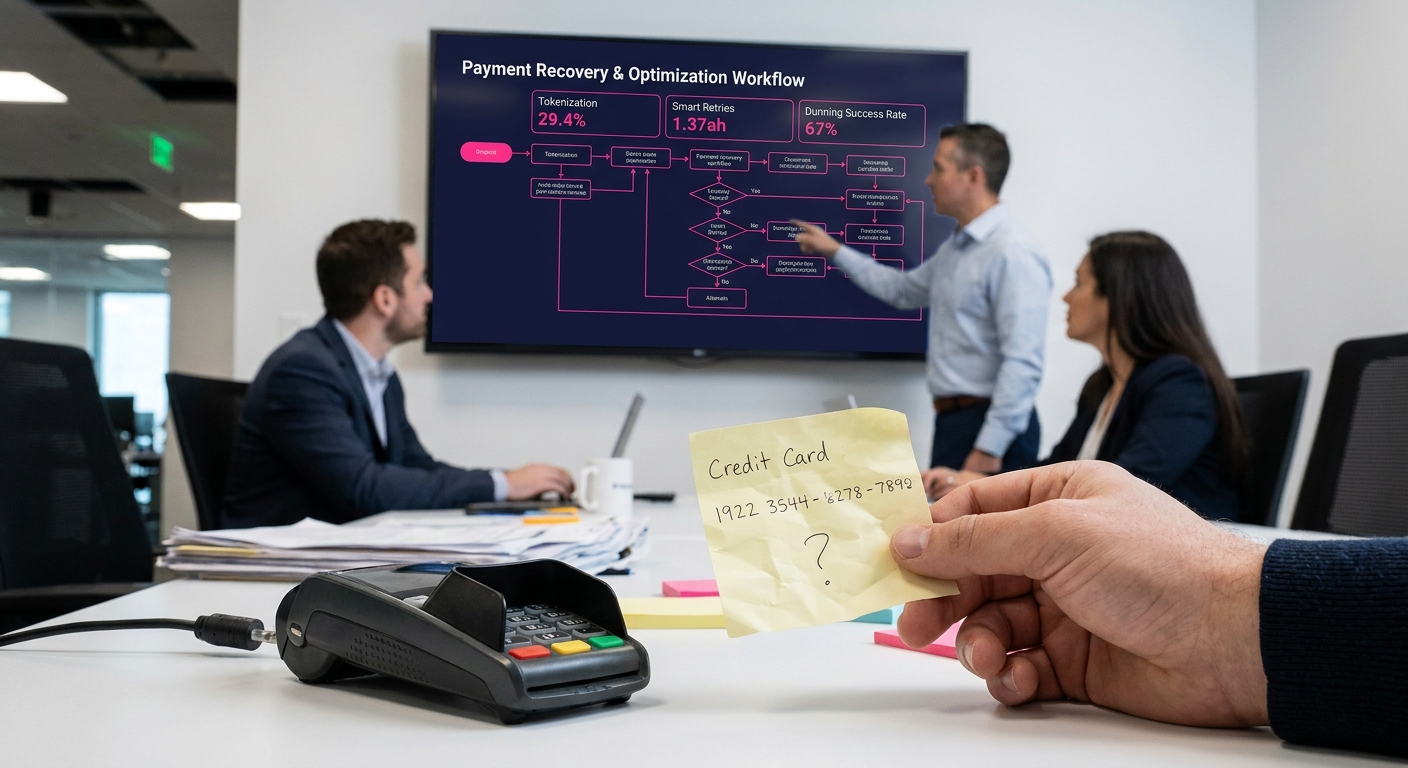

When a customer clicks the buy button, they usually assume their money instantly moves from their checking account to the merchant’s bank. The reality is much different. The moment a transaction is initiated, a hidden chain of events fires off in the background to verify, reserve, and eventually settle the funds. This process relies heavily on authorization holds, which protect both the merchant and the cardholder. But when transactions do not complete perfectly due to a dropped connection, a canceled order, or a authorization reversal, those temporary holds can quietly derail the payment authorization. For consumers, a lingering hold means their actual cash is trapped in a frustrating state of limbo. For merchants, it represents a hidden friction point that drives up support tickets, strains customer relationships, and artificially suppresses transaction approval rates.
Understanding the mechanics of these holds goes beyond standard customer service. It is a fundamental component of effective payment optimization. When you know how issuers handle locked funds, you can design better checkout flows, communicate more transparently, and build retry strategies that actually recover revenue instead of triggering further declines.
The Anatomy of an Authorization Hold
To understand why holds linger, it helps to look at the dual-message architecture that governs most card payments. When a customer makes a purchase, the merchant’s payment gateway sends an authorization request to the card issuer. The issuer checks a few basic criteria to ensure the account is open, free of fraud flags, and adequately funded. If everything looks good, the issuer approves the request and places a block on that specific amount of money.
This is the authorization stage. The funds have not actually moved, but they are fenced off so the customer cannot spend them elsewhere. In a standard and successful transaction, the merchant later sends a second message known as the capture or clearing message. This usually happens at the end of the day during batch processing and signals the issuer to transfer the money and finalize the sale.
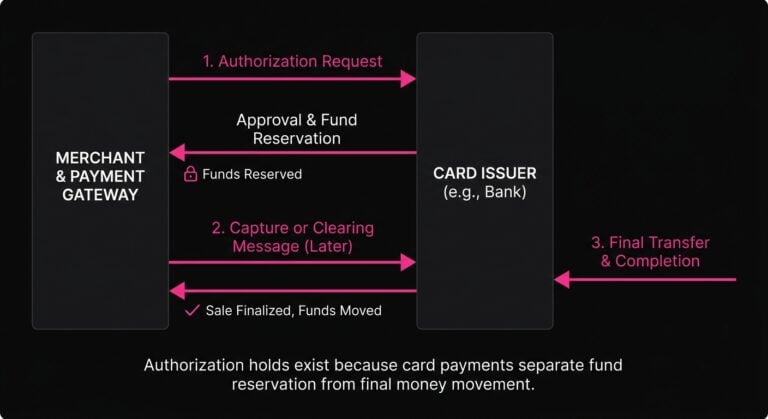
The friction occurs when that second message never arrives. A customer might close their browser mid-checkout, a merchant’s fraud filter might flag the order post-authorization, or an inventory system might realize an item is out of stock and halt the fulfillment. In these scenarios, the issuer has already fenced off the funds but is waiting on a capture request that will never come. Until the issuer’s system officially gives up and releases the hold, that money remains entirely inaccessible to the cardholder.
Determining the Timeline for Trapped Funds
The most common question frustrated customers ask support teams is exactly how long a hold lasts on a debit card before the money becomes usable again. Unfortunately, there is no single or universal answer because the timeline is dictated by the specific issuer’s policies, network rules, and the Merchant Category Code associated with the transaction. However, the industry generally operates on a few established patterns based on the perceived risk and typical behavior of different business types.
For standard retail transactions like e-commerce clothing purchases, digital goods, or coffee shop orders, issuers typically drop orphaned authorization holds within one to three business days, though many pending card transactions clear within 1-5 business days. These are straightforward, low-variable transactions where the final capture amount is almost always identical to the initial authorization amount.
The timeline stretches significantly for merchants in the travel and entertainment sectors. Hotels, car rental agencies, and cruise lines routinely process authorizations for amounts that might change based on room service, damages, or extended stays. Because of this variability, card networks allow these holds to persist much longer. For more on why virtual cards frequently fail at hotels and how payment teams can address these approval issues, see why virtual card payments fail in travel.
Gas stations present another unique scenario. Pay-at-the-pump systems rely on pre-authorizations and often place a substantial standard hold before the customer begins pumping fuel. Cards account for approximately 80% of payments at the pump, representing more than 30 million transactions daily (Source).
The Unique Sensitivity of Debit Transactions
While credit cards operate on the exact same dual-message authorization infrastructure, the real-world impact of a hold is drastically different for someone using a debit card. This distinction is critical for teams focused on optimizing checkout issues and managing customer sentiment. Non-prepaid debit cards accounted for 87.8 billion payments in 2021, representing approximately 56% of all card payments (Source).
When a hold is placed on a credit card, it simply reduces the cardholder’s available credit limit. Unless the customer is actively maxing out their card, they likely will not notice or care that a pending transaction is floating on their statement for a few days. That money belongs to the issuing bank rather than the consumer.
Debit cards are directly tied to a consumer’s liquid checking account. An authorization hold on a debit account fences off the customer’s actual cash. If a fifty-dollar transaction is authorized but not captured, that is fifty dollars the customer cannot use to buy groceries, pay rent, or cover an auto-drafting utility bill. If a subsequent bill attempts to clear while that hold is active, the customer could face overdraft fees or bounced payments. In 2019, U.S. bank and credit union customers paid an estimated $15 billion in overdraft and NSF fees (Source).
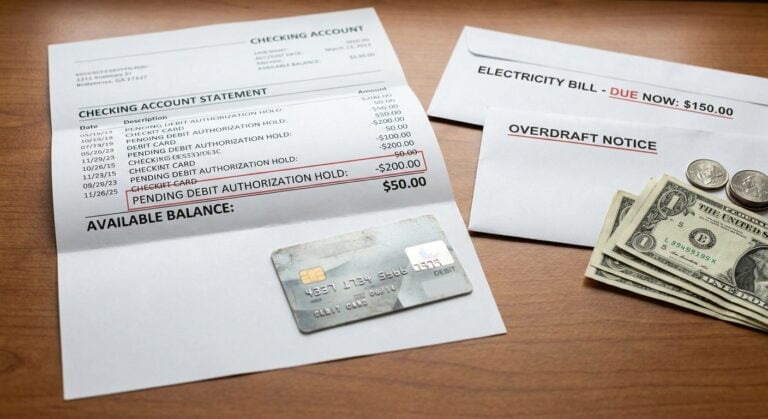
This is why payment issues involving debit cards often escalate into furious customer support tickets. The customer sees a pending charge on their banking app and assumes the merchant has taken their money, even if the merchant’s system correctly shows the transaction was voided or never finalized.
Operational Impact and the False Decline Trap
The lingering presence of an authorization hold goes beyond damaging the customer experience. It also creates tangible operational challenges for the merchant, particularly around recurring billing and revenue recovery.
Imagine a scenario where a subscription renewal triggers a payment authorization that the issuer approves and holds. However, before the capture can occur, the merchant’s internal risk system or an integration timeout causes a system failure. This results in an aborted transaction. The merchant’s billing engine logs this as a failure and schedules an automatic retry for the next day.
When the system attempts to retry failed payments, the original hold is usually still active. If the customer maintains a low balance, that initial hold may have eaten up the last of their available funds. The issuer’s response to the second attempt will be a hard decline for insufficient funds, even though the customer theoretically had enough money to cover the subscription. Notably, insufficient funds or credit accounts for 44% of card declines (Source).
This stacking effect is a major contributor to subscription payment issues. Naive retry logic that aggressively hammers a card after an initial glitch can inadvertently drain a customer’s available balance with ghost holds, guaranteeing that subsequent attempts will fail. The merchant interprets this as a lost customer while the customer is left with a drained account and a canceled service.
Best Practices for Releasing Funds Faster
Payment teams are not entirely at the mercy of issuer timelines. While merchants cannot force an issuer to release a hold instantly, they can utilize technical mechanisms to speed up the process and minimize the time a customer’s funds are locked away.
The most effective tool available is the authorization reversal message. When a transaction is canceled, voided, or fails post-authorization, merchants should never simply abandon the transaction and wait for the hold to expire organically. Instead, the payment gateway should be configured to immediately send an explicit reversal request to the acquiring bank, which then forwards it directly to the issuer.
An active reversal explicitly tells the issuer that the merchant has no intention of capturing the funds. Some legacy banking systems may still take a day or two to process the reversal and update the customer’s ledger. Implementing automated authorization reversals is a foundational step in reducing the volume of support tickets related to pending charges.
Teams should also carefully audit their authorization and capture flows to ensure they are only authorizing funds when they are reasonably certain they can fulfill the order. For physical goods, authorizing the card at checkout but waiting to capture until the item ships is standard practice. If an item is backordered for three weeks, that initial authorization will almost certainly expire and require a new authorization later. Understanding these timelines allows merchants to build more resilient order management systems.
Intelligent Approaches to Payment Recovery
Addressing the complications of authorization holds requires a strategic approach to how and when a merchant interacts with a declined card. Simply running the card again and hoping for a different result is rarely an effective strategy and often compounds the problem.
To effectively navigate these challenges, merchants need to analyze the underlying reasons behind a payment failure before initiating a second attempt. If a transaction dropped due to a gateway timeout but an authorization was likely secured, delaying the next attempt allows the ecosystem to settle. Alternatively, using account updater services to ensure the card details are accurate before attempting to authorize can prevent unnecessary friction.
This is where sophisticated recovery platforms become valuable. SmartRetry is designed to handle the nuances of payment failures by applying intelligent logic to transaction recovery. Rather than aggressively hammering an account and risking stacked holds or artificial insufficient funds errors, it evaluates optimal timing, network responses, and historical patterns. This allows the system to retry transactions when they are statistically most likely to succeed, helping merchants quietly resolve declines without tying up excess customer capital.
Navigating the Nuances of Consumer Trust
The mechanics of payment processing operate largely out of sight, yet they have a profound impact on consumer trust. Customers generally do not care about the technical differences between an authorization, a capture, and a settlement because their primary concern is their available balance. When that balance is artificially reduced by a transaction they know was canceled or failed, they lose confidence in the merchant’s infrastructure.
By understanding how debit holds function, why they linger, and how they interact with retry logic, payment professionals can build more empathetic and efficient systems. Taking proactive steps like automating active reversals, refining retry cadence to avoid stacking holds, and communicating clearly with customers about what a pending charge actually means can transform a potential source of friction into an invisible, seamless experience.
Ultimately, reducing the negative impact of authorization holds goes beyond simply avoiding support complaints. It is about building a payment environment that respects the customer’s resources while maximizing the merchant’s ability to successfully recover revenue when genuine errors occur. Thoughtful payment optimization requires balancing the technical realities of the banking system with the very real financial lives of the people interacting with it.


 Find me on Linkedin