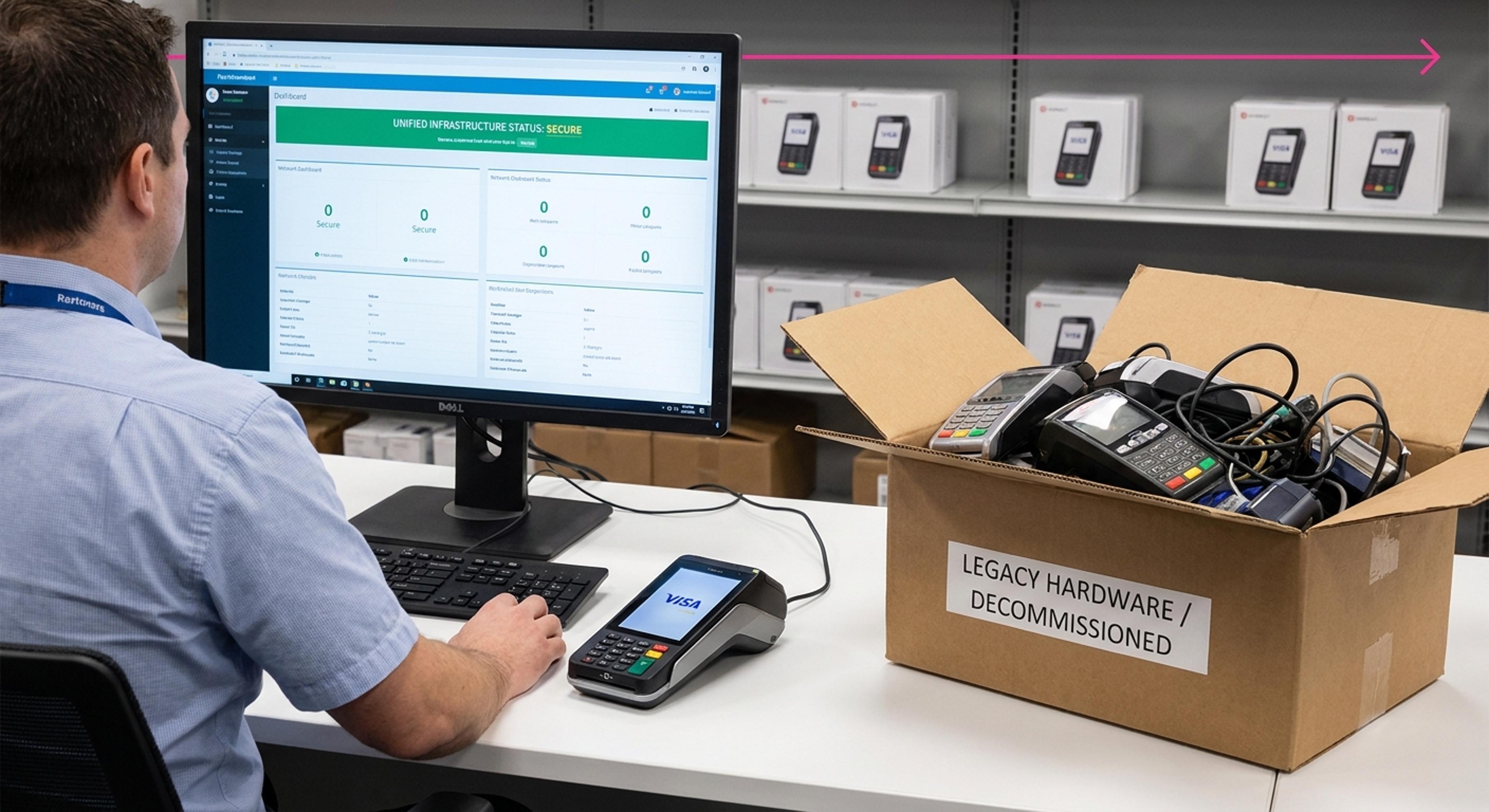

Payment declines are often treated as an inevitable cost of doing business. They happen quietly in the background of everyday commerce: a customer attempts to check out, a transaction fails, and the business records a minor loss. For a long time, merchants accepted this as a standard operational reality. But treating these failures as static, unchangeable losses ignores the underlying mechanics of modern payment networks. The reality of transaction approval is far more complex. Behind every rejected transaction is a network of issuers, acquirers, and gateways communicating through outdated protocols and rigid risk models.
When a transaction is declined, it is rarely a simple matter of a customer lacking funds. More often, it’s a miscommunication within the payment processing flow. In fact, Mastercard reports that 15% of declines happen due to technical issues or policy errors (Source). Understanding the data behind these failures reveals a different picture of the payment ecosystem, since the gap between what merchants perceive as legitimate revenue and what issuing banks approve is substantial. By examining the precise nature of these declines, teams can begin to shift their approach from passive acceptance to active payment recovery.
Revenue Lost To Declines
The financial impact of payment declines extends far beyond the occasional lost cart. Across the global economy, the cumulative effect of these uncompleted transactions represents a structural leak in the revenue funnel. Research and data compiled by the Aite-Novarica Group indicate that $443B is lost annually to payment declines. This figure encompasses both legitimate fraud prevention and the far more common issue of legitimate customers being turned away by overly restrictive authorization rules.
To understand how $443B evaporates from the digital economy, it helps to look at the priorities of the institutions approving these transactions. Issuing banks are fundamentally risk-averse, and their primary objective during a payment authorization is to protect their cardholders and themselves from liability. When a merchant submits a transaction, the issuer’s risk model evaluates dozens of data points in milliseconds. If any variable appears anomalous, whether it’s a slight mismatch in billing data, an unusual purchase time, or cross-border friction, the model tends to default to a decline.
The resulting loss is not just the immediate value of the transaction. When merchants lose revenue to declines, they also forfeit the customer acquisition costs spent to bring that buyer to the checkout page. In subscription and recurring revenue models, a single payment declined today represents the loss of all future recurring billing cycles associated with that account, so the economic damage compounds over time. Yet a meaningful portion of this $443B is entirely recoverable. Because many of these declines are driven by systemic caution rather than actual fraud, the revenue isn’t permanently lost. It’s simply waiting for a more optimized path to approval.

False Decline Prevalence
A common misconception among growing businesses is that a high rate of rejected transactions is a specialized problem affecting only high-risk industries. The data contradicts this assumption. This is a systemic feature of the credit card network, not a niche anomaly.
False declines occur when a legitimate customer with sufficient funds and honorable intentions is rejected by the payment system. Because every business that processes card payments must interface with the same major card networks and the same fragmented ecosystem of issuing banks, no merchant is entirely immune. Even a business selling low-risk digital goods will encounter false declines, since the friction often originates on the issuer’s side, completely independent of the merchant’s specific practices.
Several technical factors contribute to this universal prevalence. Risk algorithms rely heavily on historical data. If a customer is traveling and attempts to make a purchase from an unfamiliar IP address, the system may flag it. Similarly, broad velocity checks can trigger a decline if a consumer makes several rapid purchases across different sites, even if none of those purchases are individually suspicious. The communication standard used by most of the industry also limits how much context a merchant can send to an issuer. Without rich data regarding the user’s account history or device trust, the issuing bank is forced to make a binary decision based on a limited payload. Consequently, every merchant encounters situations where perfectly valid transactions are blocked by an issuer’s blunt risk thresholds. According to Adyen, relying on static controls blocks up to 10% of legitimate customers (Source).
Recoverable Failed Transactions
Not all declines are final. When a transaction is rejected, the issuer returns a response code. of these codes represent hard declines, such as a closed account or a stolen card, meaning the transaction should never be reattempted. However, a large percentage are soft declines, categorized by vague responses like insufficient funds, temporary network timeouts, or the widely used and ambiguous “Do Not Honor” code. Checkout.com notes that soft declines make up between 80% to 90% of all declines (Source).
This presents a clear operational opportunity to reduce payment declines without increasing fraud exposure.
Simply resubmitting a failed transaction immediately and repeatedly is counterproductive, and naive retries can severely damage a merchant’s transaction approval rate. Issuers track the ratio of approved to declined authorization requests. If a merchant forcefully retries a declined card multiple times in a matter of seconds, the issuer’s risk engine may flag the merchant as a potential threat, leading to broader network blockages and an overall decrease in authorization performance.
Instead, intelligent recovery requires interpreting the specific issuer response. If a transaction fails due to insufficient funds, attempting to retry the payment on a Friday, when payroll deposits typically clear, yields a higher probability of success than retrying it immediately on a Tuesday. Similarly, network timeouts or gateway errors can often be resolved by routing the transaction through an alternative payment service provider or waiting for standard network traffic to stabilize. By applying targeted logic to soft declines, businesses can convert a meaningful share of their failed transactions back into captured revenue.

Post-Failure Abandonment
While automated retries handle background failures, the user-facing experience of a decline carries immediate consequences for conversion. The moment a customer sees a checkout error, the purchase momentum breaks.
This metric underscores the fragility of consumer trust during the checkout process. When a user experiences a payment failure at checkout, they rarely blame their issuing bank. Instead, the frustration is directed at the merchant. The customer assumes the website is broken, untrustworthy, or overly complicated. While the merchant knows the issue originated with the bank’s risk model, the consumer only sees a red error message blocking their purchase.
The psychological response to checkout issues explains why so few customers attempt to resolve the problem themselves. Rather than reaching for a different credit card or calling their bank to clear a fraud alert, nearly half of all buyers simply close the tab and take their business to a competitor. This behavior limits the merchant’s ability to rely on the customer to fix payment issues. Designing a system that can catch temporary failures and execute background retries before presenting a hard failure to the user is one of the most practical steps a business can take to protect its checkout conversion rates.
Additional Statistics
The operational impact of payment failures becomes even more pronounced when applied to recurring billing models. Subscription businesses face a unique set of challenges because they process transactions without the customer actively present to provide a secondary payment method.
In the subscription economy, involuntary churn, where a customer loses access to a service simply because their payment method failed, often accounts for a larger share of lost accounts than voluntary cancellations. When a recurring card declines, the merchant must rely on dunning campaigns and automated recovery cycles.
Addressing subscription payment issues requires more than standard payment gateways provide out of the box. Issuing banks frequently update card details, issue new expiration dates, or replace lost cards. If a merchant’s billing system doesn’t automatically interface with account updater services or utilize network tokens, legitimate recurring charges will continue to fail.

Platforms like SmartRetry are built to address these specific operational gaps. By evaluating historical data and categorizing issuer responses, the platform determines the appropriate timing and routing for subsequent attempts. This approach provides merchants with a layer of intelligence that dynamically adjusts retry strategies, helping to recover revenue while protecting their overall standing and relationship with payment processors.
Ultimately, minimizing the cost of payment declines requires a shift in perspective. Revenue lost to authorization failures, the systemic presence of false declines, and the resulting customer abandonment are not insurmountable forces of nature. They are data problems. By understanding the mechanics of how issuers evaluate risk, differentiating between hard and soft declines, and implementing measured, intelligent retry logic, organizations can reclaim a substantial portion of the transactions they have rightfully earned. Moving from passive reporting to active payment optimization allows teams to close the leaks in their revenue operations, ensuring that legitimate customers can complete their purchases with minimal friction.



 Find me on Linkedin