
The payment landscape is shifting rapidly, and managing disputes is no longer just a back-office chore. It has become a frontline strategy for protecting revenue, as merchants face an increasingly complex ecosystem of payment failures and friendly fraud, with subscription businesses facing persistent chargeback risks. Consumers are changing how they interact with recurring billing: instead of navigating confusing cancellation portals, many cardholders simply open their banking apps to dispute the charge. This behavioral shift creates a distinct challenge for payment operations teams trying to balance revenue recovery with a healthy dispute ratio. Understanding how to navigate this environment requires a look at both the technical payment processing flow and the human element of billing friction.
Recent industry developments highlight just how critical this intersection has become. A recent feature in PC Tech Magazine outlined several proven ways to reduce chargebacks as we move toward 2026, signaling that dispute mitigation remains a core focus for merchants. Simultaneously, major players are realigning their infrastructure to meet these challenges.
What Just Happened in the Dispute Ecosystem
Several distinct but connected news items recently highlighted the evolving nature of chargeback management. Most notably, FinTech Global and the Voice of Alexandria reported on a strategic partnership between subscription management platform Recurly and chargeback mitigation firm Justt. Their collaboration targets the rising cost of chargebacks by aiming to eliminate manual reconciliation for subscription merchants, automating a process that has historically drained operational resources.
At the consumer level, a report from U.S. News – Money identified a specific trigger for this rising tide of disputes: canceled subscriptions. The publication noted that friction in the cancellation process is actively driving credit card disputes, as consumers treat bank-initiated chargebacks as a primary method for ending unwanted services.
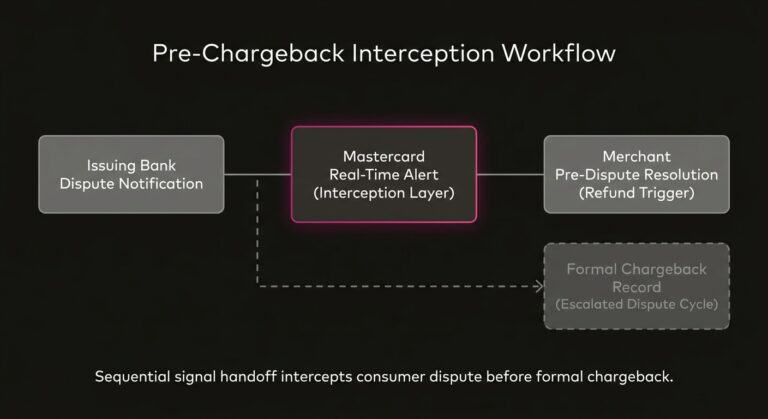
Finally, the card networks themselves are emphasizing proactive solutions. Mastercard recently highlighted the role of payment dispute resolution through real-time alerts, explaining how early notification systems help stop chargebacks before they officially enter the network’s dispute lifecycle. Together, these developments paint a clear picture: the traditional, reactive approach to chargeback management is no longer sufficient.
Why Payment Teams Should Care
For product managers and payment operations leaders, this news highlights a structural shift in how payment issues are handled. Chargebacks are frequently treated as an isolated problem, but they are deeply intertwined with overall payment optimization. When a business experiences a high volume of disputes, it often points to upstream issues in the checkout flow, billing clarity, or renewal communication, particularly as roughly 70% of subscription disputes trace back to recurring billing confusion rather than outright fraud (Source).
There is a direct correlation between how a merchant handles a transaction declined scenario and their subsequent dispute rate. For example, if a billing engine aggressively attempts to retry failed payments without considering the underlying decline codes, it may eventually force a transaction through. However, if the customer had already assumed their subscription was canceled after the initial payment failures, that successful retry will almost certainly result in a friendly fraud chargeback.
Furthermore, rising dispute rates can negatively impact your overall transaction approval rate. Issuers track merchant dispute ratios closely. When a merchant’s ratio climbs, issuers become more conservative with their authorization decisions, leading to higher decline rates even for legitimate, well-intentioned customers. Managing disputes is therefore not just about winning individual cases. It is about maintaining a healthy reputation with the issuing banks.
Recommended Actions: 9 Proven Ways to Reduce Chargebacks
Drawing on recent industry shifts and the broader strategies discussed in the PC Tech Magazine feature, payment teams should consider a structured approach to dispute mitigation. Integrating these nine practical methods into your payment processing flow can help protect revenue while maintaining a frictionless customer experience.
1. Intercept Issues with Real-Time Alerts
As highlighted by Mastercard, real-time alert networks allow merchants to pause the standard dispute lifecycle. When a cardholder initiates a dispute with their issuing bank, the alert system pings the merchant before it becomes an official chargeback. The merchant can then choose to issue an immediate refund, effectively canceling the dispute, saving the chargeback fee, and protecting their issuer ratio.
2. Streamline Subscription Cancellation Flows
The U.S. News – Money report makes one thing clear: if you make it difficult for users to cancel, they will ask their bank to do it for them. Subscription payment issues often stem from intentional friction: hidden cancellation buttons, mandatory phone calls to customer retention agents, or complex offboarding surveys. Simplifying this process removes the primary incentive for friendly fraud.
3. Automate Dispute Evidence Gathering
The partnership between Recurly and Justt underscores the inefficiency of manual dispute management. Building a compelling evidence package, one that matches IP addresses, delivery confirmations, terms of service agreements, and login histories, takes time. Transitioning to automated resolution platforms that programmatically pull this data from your CRM and payment gateway allows teams to challenge illegitimate disputes at scale without adding headcount.
4. Clarify Billing Descriptors
A significant portion of friendly fraud occurs simply because the cardholder does not recognize the charge on their bank statement. Optimizing payment authorization involves ensuring your billing descriptor clearly identifies your brand, product, and contact information. An unrecognized dynamic descriptor often leads to an immediate card declined report from the customer to their bank.
5. Deploy Intelligent Retry Logic
A common operational misstep is treating every declined payment equally. Hammering an issuer with retries for a hard decline, such as a lost or stolen card, only damages your authorization standing. More importantly, poorly timed retries on soft declines can frustrate customers. Structuring your retry logic to respect issuer responses ensures you are recovering revenue gently, rather than generating unexpected charges that prompt the customer to file a dispute, especially as optimized retry strategies can achieve a recovery rate of Approximately 71% (Source) of eligible failed transactions.

6. Eliminate Manual Reconciliation Traps
Relying on manual spreadsheets to reconcile chargebacks, refunds, and original transactions creates latency. By the time a finance team identifies a dispute, the window to respond or halt the shipment of physical goods may have closed. Integrating your payment provider directly with your dispute management tool ensures data flows freely, removing human bottlenecks from the resolution timeline.
7. Leverage Issuer Collaboration Networks
Beyond standard alerts, networks like Ethoca and Verifi allow merchants to share order details directly with the issuer in real time. If a customer calls their bank confused about a charge, the bank representative can instantly pull up the digital receipt, item details, and delivery status provided by the merchant. This transparency often resolves the customer’s confusion on the phone, preventing the dispute from ever being filed.
8. Align Customer Support with Payment Operations
Your customer service team is the first line of defense against payment issues. If a customer writes in complaining about checkout issues or an unexpected renewal, support agents must have the tooling to issue a refund quickly. If support ticket response times lag behind the customer’s patience, they will escalate the issue to their bank. Ensuring seamless communication between your helpdesk and your payment gateway is an operational necessity.
9. Analyze Decline Codes for Early Warning Signs
Decline codes offer a wealth of information about customer intent and account health. Monitoring trends in these codes can serve as an early warning system for downstream disputes. If you notice a sudden spike in specific decline codes related to fraud or insufficient funds during renewal cycles, it may indicate that your upcoming cohort of successful bills is at a higher risk of being disputed. Proactive analysis allows you to adjust your risk thresholds accordingly.
The Role of Intelligent Infrastructure in Payment Recovery
Handling the delicate balance between recovering lost revenue and avoiding customer disputes requires sophisticated tooling that respects both the merchant’s bottom line and the cardholder’s experience. This is where specialized platforms fit into the modern technology stack.
SmartRetry approaches this challenge by focusing on payment optimization and intelligent retries of declined payment transactions, helping merchants recover revenue and improve transaction approval rates without resorting to aggressive billing tactics. By interpreting specific issuer responses and dynamically adjusting the timing and frequency of retry attempts, the platform minimizes the friction that often leads to chargebacks. Rather than blindly attempting to force a transaction through, a practice that frustrates consumers and degrades issuer trust, SmartRetry relies on data-driven pacing, ensuring that payment recovery efforts remain compliant, respectful, and aligned with long-term retention goals.

Looking Ahead
As we navigate the payment landscape toward 2026, the lines between fraud prevention, payment optimization, and customer experience will continue to blur. The recent discussions across industry publications point to a maturing ecosystem where merchants can no longer afford to treat chargebacks as an isolated cost of doing business.
Reducing disputes requires a holistic view of the customer journey, from the moment a payment is authorized to the final cancellation request. By embracing real-time alerts, automating evidence compilation, simplifying subscription management, and utilizing intelligent retry strategies, payment teams can protect their margins and maintain healthy relationships with both consumers and issuing banks. The tools to build a resilient payment infrastructure are readily available. The strategic differentiator will be how seamlessly merchants can weave them into their daily operations.



 Find me on Linkedin