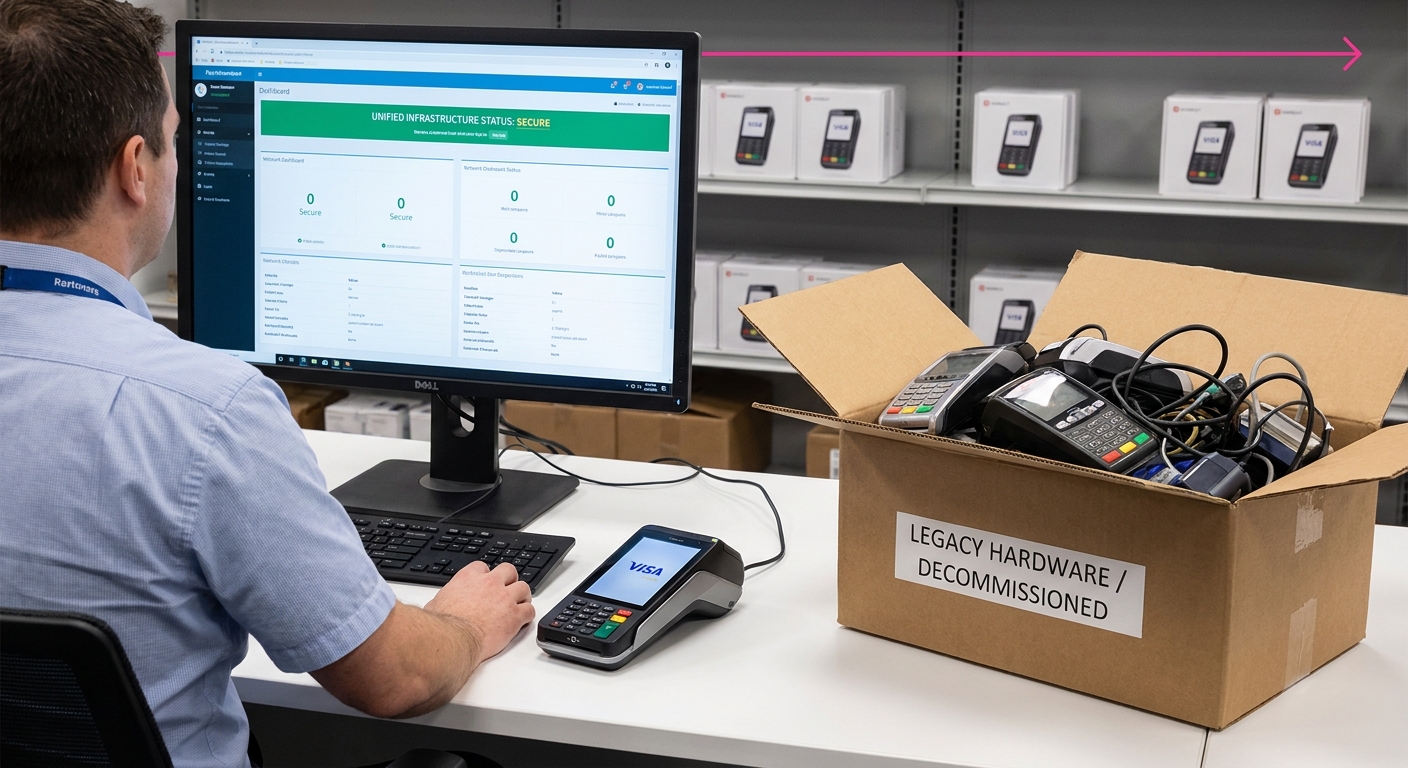

The landscape of recurring payments is quietly shifting beneath our feet. For years, businesses relied almost entirely on traditional credit card rails to process recurring charges. This worked well enough for a time, establishing the foundational infrastructure of the modern subscription economy. But it also brought a familiar, persistent set of headaches that merchants were forced to absorb. Payment failures became an accepted cost of doing business. When a transaction declined due to an expired card, outdated billing information, or temporary insufficient funds, it meant immediate lost revenue and increased friction for the customer. Now, alternative payment methods are moving rapidly into the core of enterprise billing. As new rails emerge, payment teams must fundamentally rethink how they manage subscriptions, optimize authorizations, and handle checkout issues. It is no longer enough to just accept a baseline level of failure. The tools now exist to actively engineer better payment outcomes.
What Just Happened
Confirmo recently announced the launch of stablecoin subscription billing specifically tailored for enterprise use. This development signals a significant maturation in how digital assets are utilized in corporate finance. It is no longer just about one-off transactions or speculative trading. Instead, it is about establishing reliable, recurring payment processing flows using blockchain architecture to settle ongoing obligations in fiat-pegged currencies. Underscoring this shift, monthly stablecoin transaction volume reached $969.9 billion in August 2025 (Source).

This move by Confirmo is part of a broader, aggressive industry trend toward modernizing billing infrastructure. Across the fintech spectrum, we are seeing activity aimed at smoothing out the billing experience and reducing manual interventions. Volante, for example, recently launched its Vol360i AI to automate complex payment operations, streamlining the tedious back-office reconciliation and exception handling that often bog down finance teams. Concurrently, Data Energy tapped GoCardless for recurring pay-by-bank functionality to automate utility billing, strategically bypassing card networks in favor of direct account-to-account transfers.
The financial impact of this modernization is tangible across the market. Paymentus recently reported surging revenues as businesses seek comprehensive ways to deliver smoother billing experiences to their users. At the same time, earnings reports show traditional banks aggressively chasing the mid-market with upgraded payments platforms. Enterprises are clearly tired of the friction and high processing costs inherent in legacy billing systems, and they are adopting alternative technologies to shore up operational efficiency.
Why Payment Teams Should Care
When a fintech company launches stablecoin features, the immediate reaction from some corners of the industry is cautious skepticism. However, integrating stablecoins into subscription billing is a highly pragmatic response to persistent operational challenges. Notably, 30% of businesses on Stripe operate with recurring business models (Source). For payment teams, the core appeal lies in bypassing the legacy friction associated with traditional card networks to protect the bottom line and prevent unnecessary customer loss.
Every payment professional knows the pain of failed subscription payments. You secure a new customer, set them up on a recurring plan, and everything runs smoothly. That is, until a card is physically replaced, a credit limit is unexpectedly reached, or a mysterious network timeout occurs. The resulting card declines do more than just delay cash flow. They drain revenue, create massive spikes in involuntary churn, and consume valuable operational resources. When a legitimate customer is cut off from a service they intended to pay for simply because of a routing error, the business suffers entirely avoidable damage.

A stablecoin subscription operates on fundamentally different mechanics. Instead of relying on a complex web of issuers, acquirers, payment gateways, and card networks to approve a transaction, smart contracts can programmatically execute the payment on a predetermined schedule. This shift theoretically reduces the reliance on traditional issuer response codes that require complex translation and manual handling by operations teams.
However, adopting new rails does not entirely eliminate payment issues. It simply changes their nature and origin point. Instead of dealing with a generic card decline, a payment team might face a failed smart contract execution due to an unfunded digital wallet, revoked permissions, or sudden network congestion. Understanding these new failure modes is crucial for anyone involved in payment recovery.
The Changing Anatomy of a Payment Decline
While the promise of stablecoins and direct bank payments is highly enticing, the reality is that traditional credit and debit cards will continue to dominate the subscription landscape for the foreseeable future, with Visa alone settling roughly $15 trillion in annual payments volume (Source). Consumers are deeply habituated to paying with cards, and the vast reward ecosystems built around them ensure their longevity. This means payment teams must learn to manage a complex, hybrid environment. Optimizing the payment processing flow across multiple distinct rails requires a deep, nuanced understanding of why transactions fail in the first place.
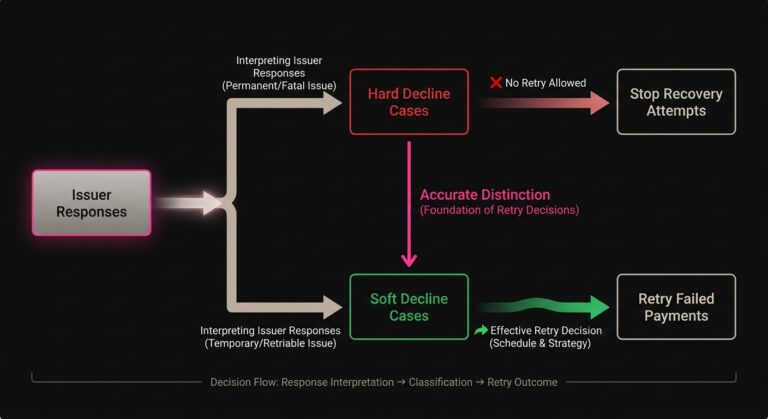
When a traditional fiat transaction is declined, it is accompanied by a code offering clues to the underlying issue. Sometimes it is a hard decline, meaning the account is closed or the card is reported stolen. More often, it is a soft decline, indicating a temporary issue like insufficient funds or a generic message from an overly cautious fraud filter. The primary goal of modern payment optimization is to parse these issuer responses accurately, segment them by risk, and determine the most effective way to retry failed payments without incurring network penalties or frustrating the user.
In contrast, decentralized billing models using stablecoins bypass the issuer entirely. The approval or failure of a transaction is determined strictly by the logic embedded in the blockchain network. If a wallet has sufficient funds, the smart contract is authorized, and network fees are covered, the transaction clears deterministically. This deterministic nature can drastically improve the overall transaction approval rate by removing the probabilistic risk scoring that card issuers apply to recurring charges. However, it also means that when checkout issues do occur, standard dunning processes and legacy retry strategies designed for traditional cards will be entirely ineffective.
Recommended Actions
Given this rapid evolution in fintech, how should merchants respond? The introduction of stablecoin subscriptions by Confirmo, the push for AI-driven payment operations by Volante, and the rise of account-to-account billing indicate that the standard payments playbook is changing rapidly. Merchants must adapt their strategic approach to protect recurring revenue streams and prepare for a multi-rail future.
Assess Your Current Infrastructure
The immediate first step is to evaluate your existing payment infrastructure with a critical, objective eye. Identify precisely where the friction lies in your subscription billing setup. For example, determine if you are experiencing a high volume of payment issues tied to specific issuers, transaction types, or geographic regions. Understanding this baseline performance is critical before introducing new payment rails. If your systems cannot effectively categorize and manage traditional card declines, adding stablecoins or direct pay-by-bank options will only introduce more operational overhead. Map your existing decline data to understand whether your churn is driven by genuine customer intent or by technical failures that could be resolved internally.
Map Out Hybrid Payment Flows
As enterprises slowly begin to accept stablecoins alongside traditional fiat currency, mapping the entire end-to-end payment processing flow becomes an essential exercise. You need to understand exactly how a transaction moves from the checkout page to final settlement across radically different methods. Determine how a stablecoin transaction failure will be logged in your internal systems compared to a traditional card decline. Your reporting tools, revenue recognition software, and customer relationship management systems must be capable of normalizing these disparate data points into a single, unified view of customer billing health. Without this, your finance team will struggle with basic reconciliation.
Refine Your Retry Logic
For the foreseeable future, the most significant immediate revenue gains for any subscription business will come from optimizing how you handle traditional payment failures. Do not let the allure of new technology distract your team from the fundamental blocking and tackling of payment recovery. Implement intelligent logic to reduce payment declines on your existing card rails. This involves thoroughly analyzing historical transaction data to determine the optimal timing, day of the week, and specific network conditions to retry failed payments. Relying on aggressive, hard-coded schedules is an outdated approach that often triggers further issuer penalties and severely damages your merchant standing with acquiring banks.
SmartRetry’s Response & Capabilities
As the enterprise billing landscape expands to include stablecoins, pay-by-bank, and AI automation, managing the underlying complexity of failed transactions remains a critical operational challenge. Smart Payment Retries is designed specifically for this reality. The platform focuses on payment optimization and intelligent retries of declined transactions, helping merchants recover revenue and improve approval rates. By deeply analyzing specific issuer responses and leveraging dynamic, data-driven retry logic tailored to distinct decline codes, SmartRetry empowers payment teams to navigate the intricacies of traditional fiat declines. This ensures a resilient, highly optimized billing operation that seamlessly adapts to an increasingly complex hybrid payment ecosystem.
Looking Ahead: Building Resilient Billing Systems
The integration of stablecoins into recurring billing models is more than just a novel technological feature. It is a clear indicator of where enterprise finance is heading in the long term. Businesses are aggressively seeking alternative payment methods that offer faster settlement times, drastically lower transaction costs, and deterministic authorization models. The traditional reliance on a convoluted web of legacy card networks is being actively challenged by modern architectures that promise to streamline the global movement of money.
However, technological innovation rarely results in immediate operational simplification. For the next several years, merchants will operate in a highly transitional phase. They will need to robustly support established fiat rails while selectively integrating alternative methods like digital assets or direct bank payments where they make the most strategic sense. Success in this hybrid environment requires a highly disciplined, analytical approach to payment operations. It demands that teams look beyond surface-level checkout metrics and deeply understand the mechanics of authorization, decline handling, and transaction recovery across completely diverse systems.
Ultimately, the core objective for any enterprise remains unchanged: ensuring that legitimate customers can seamlessly pay for their subscriptions with minimal friction. Whether a transaction is approved by a traditional tier-one bank or validated by a decentralized blockchain network, the underlying operational mandate is to protect and maximize recurring revenue. By staying keenly informed on industry shifts, maintaining rigorous optimization practices, and applying intelligent, adaptive strategies to handle the inevitable payment failures, merchants can turn complex billing challenges into a distinct, measurable competitive advantage.


 Find me on Linkedin