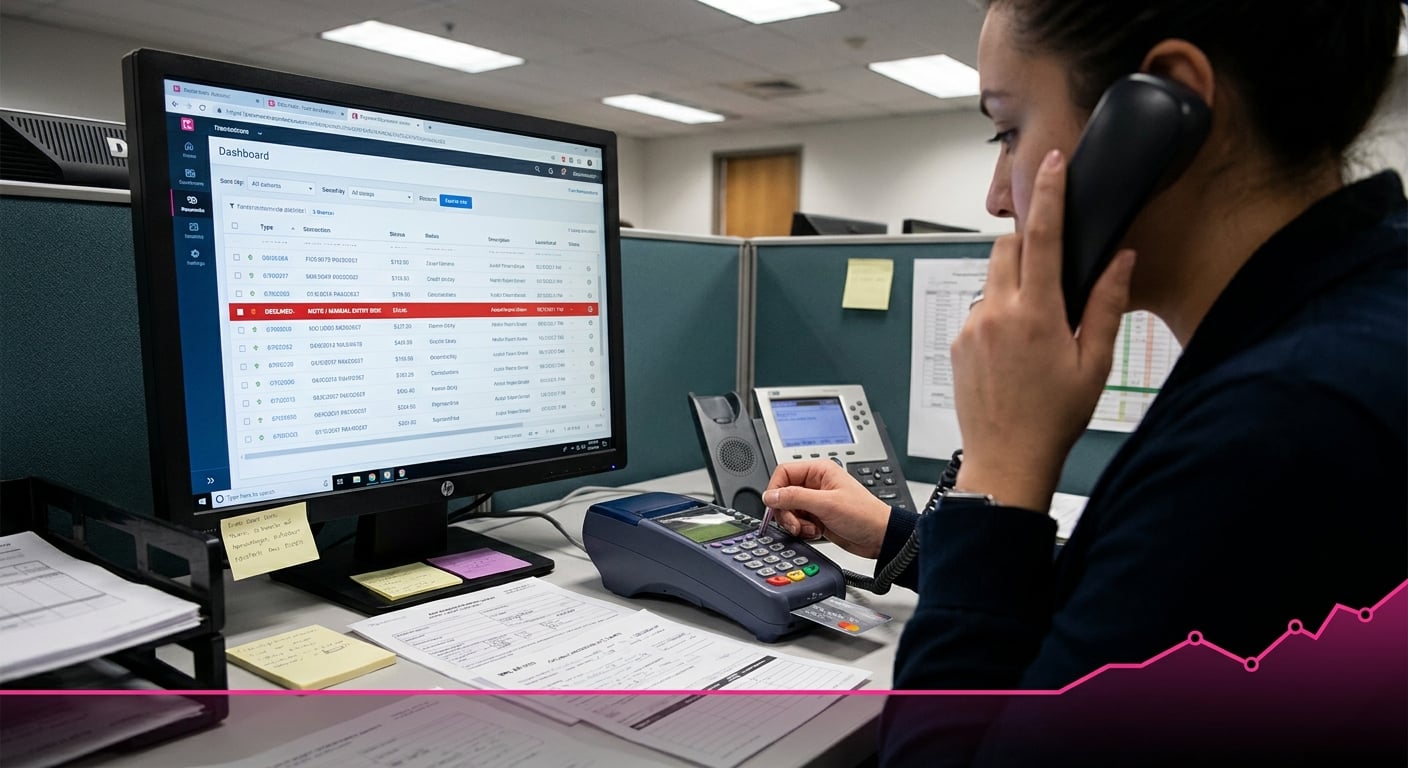
A chargeback is a reversal of a payment transaction initiated by a cardholder, usually due to a dispute with the merchant or unauthorized use of their card. This process allows consumers to reclaim funds directly from their issuing bank, bypassing the merchant, but imposes significant financial penalties, operational overhead, and reputational risks on merchants.
How does a Chargeback work?
The chargeback process begins when a cardholder disputes a transaction with their issuing bank. Common reasons include unauthorized transactions, services not rendered, merchandise not received, or defective goods. The issuing bank reviews the cardholder’s claim and, if deemed valid, provisionally reverses the transaction, debiting the funds from the merchant’s account through the card scheme (e.g., Visa, Mastercard) and the acquiring bank.
Upon receiving the chargeback notification, the merchant typically has a limited timeframe to respond, often by providing compelling evidence to refute the dispute. This evidence, which can include proof of delivery, communication logs, or transaction details, is then reviewed by the issuer and, if necessary, the card scheme. If the merchant’s evidence is successful, the funds are returned; otherwise, the chargeback becomes final, and the merchant bears the loss.
Why does Chargeback matter for payment teams?
Chargebacks are a critical concern for payment teams due to their direct financial impact and operational complexity. Each chargeback not only reverses the original revenue but also incurs additional fees levied by acquirers and card schemes, eroding profit margins. Moreover, a high volume of chargebacks can signal risk to card schemes and issuing banks, potentially leading to increased scrutiny, higher processing fees, or even the suspension of payment processing capabilities for the merchant.
The operational burden of managing chargebacks is also substantial, requiring payment and revenue operations teams to dedicate significant resources to investigation, evidence gathering, and dispute representation. This diversion of resources can hinder focus on core business growth. Online merchants alone face estimated annual losses of $125 billion due to chargebacks (PYMNTS.com, 2023), underscoring their profound impact on business viability.
What are common use cases for Chargeback?
- E-commerce Retail: A customer disputes a transaction claiming they never received the purchased item or that the product was significantly different from its description.
- SaaS/Subscription Services: A user requests a chargeback after forgetting to cancel a free trial, or claims they were billed post-cancellation.
- Digital Goods/Gaming: Parents dispute charges made by their children for in-game purchases without authorization.
- Marketplaces: A buyer on a platform claims a third-party seller’s item was counterfeit or damaged, leading to a dispute against the marketplace operator.
- Travel/OTA: A traveler disputes a booking charge, claiming the hotel or flight was not as advertised, or that they were charged for a cancelled trip.
Chargeback vs. Refund
While both chargebacks and refunds involve returning funds to a customer, their initiation, implications, and processes differ significantly.
| Feature | Chargeback | Refund |
|---|---|---|
| Initiator | Cardholder (via their issuing bank) | Merchant |
| Control | Merchant has limited control; dispute process is managed by banks/schemes | Merchant initiates and controls the process directly |
| Impact on Merchant | Financial loss, fees, operational burden, reputational risk, potential scheme penalties | Financial loss (original transaction), typically no additional fees or penalties |
| Timing | Can occur weeks or months after transaction; strict response deadlines for merchant | Usually initiated shortly after customer request; processed quickly by merchant |
| Purpose | Consumer protection against fraud, unauthorized transactions, or merchant non-performance | Customer service, product return, or service cancellation |
How is Chargeback measured?
Chargebacks are primarily measured using the chargeback ratio, which is typically calculated as the number of chargebacks received divided by the total number of transactions processed within a specific period (e.g., month). This ratio is crucial because card schemes like Visa and Mastercard impose thresholds; exceeding these can trigger monitoring programs, higher fees, or even processing termination. Merchants also track chargebacks by total monetary value to understand the overall financial exposure.
What are best practices for Chargeback?
- Robust Fraud Prevention: Implement advanced fraud detection tools to prevent fraudulent transactions that often lead to chargebacks.
- Clear Communication: Use recognizable billing descriptors, transparent terms and conditions, and easily accessible customer service contact information.
- Proactive Customer Support: Address customer inquiries and complaints promptly to resolve issues before they escalate into chargebacks.
- Detailed Record Keeping: Maintain comprehensive transaction data, order fulfillment records, proof of delivery, and customer interaction logs to support dispute representation.
- Effective Dispute Management: Develop a streamlined process for reviewing chargeback notifications, gathering compelling evidence, and submitting timely responses to acquirers.
- Optimize Payment Gateways: Ensure payment gateways are configured to handle transactions efficiently, reducing payment failures that might inadvertently lead to customer confusion and disputes.
How does SmartRetry help with Chargeback?
While SmartRetry focuses on intelligent payment retries and optimizing approval rates, its impact extends to chargeback prevention indirectly. By significantly reducing false declines and improving the success rate of legitimate transactions, SmartRetry helps eliminate a common trigger for ‘friendly fraud’ chargebacks, where a customer might dispute a charge they didn’t recognize or forgot about after multiple initial declines. SmartRetry’s advanced analytics also provide insights into transaction patterns, helping merchants identify and mitigate potential points of friction that could otherwise lead to customer disputes. Learn how to recover lost revenue and prevent future disputes by optimizing your payment approval rates with SmartRetry.