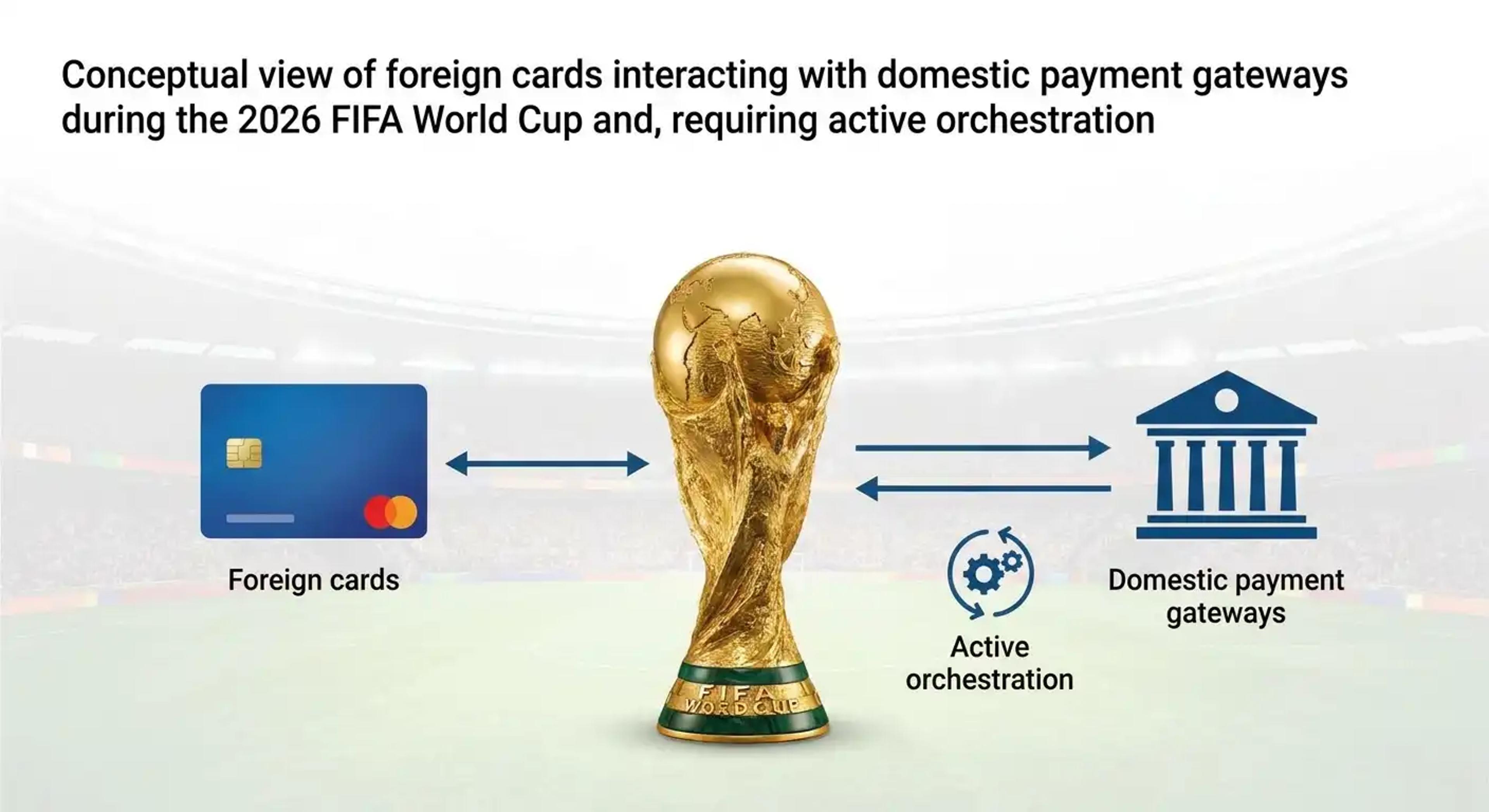
Local acquiring is the practice of routing a card payment through an acquiring bank based in the same country as the cardholder’s issuing bank, so the transaction is authorised domestically instead of crossing borders. This strategy typically lifts approval rates and lowers scheme fees and foreign exchange costs for merchants operating internationally.
How does Local Acquiring work?
In a standard payment transaction, the cardholder’s bank (issuer) and the merchant’s bank (acquirer) can be in different countries, leading to a cross-border card decline. Local acquiring changes this by ensuring the merchant partners with an acquiring bank that has a presence in the cardholder’s country.
When a merchant uses local acquiring, the payment request travels through domestic payment networks within the cardholder’s country. This means the issuing bank perceives the transaction as a local one, often reducing perceived risk and streamlining the authorization process. Merchants typically achieve this by leveraging a global payment service provider (PSP) with a network of local acquiring partners, or by establishing local entities and direct acquiring relationships in key markets.
Why does Local Acquiring matter for payment teams?
Local acquiring significantly impacts a merchant’s bottom line and operational efficiency by directly influencing authorization rates and transaction costs. Routing payments domestically can improve the likelihood of approval, as issuers are generally more comfortable approving transactions that originate and settle within their own country.
Beyond approval rates, local acquiring can lead to substantial cost savings. It often reduces interchange fees, scheme fees, and eliminates or lessens foreign exchange conversion costs that are common with cross-border processing. Optimizing for local acquiring is a critical strategy for payment operations managers aiming to maximize revenue recovery and minimize processing expenses in international markets. In fact, domestic transactions processed via local acquiring have higher approval rates than cross-border transactions, with a difference of 3 to 8 percentage points (Tagada – What Is Local Acquiring? Definition & Guide, 2024).
What are common use cases for Local Acquiring?
- E-commerce Retailers: Global e-commerce merchants use local acquiring to improve conversion rates and reduce payment friction in high-volume international markets, leading to fewer abandoned carts.
- Subscription Services (SaaS): SaaS and other subscription-based businesses leverage local acquiring to enhance recurring revenue by minimizing involuntary churn caused by payment declines in different regions.
- Travel/OTAs: Online travel agencies and airlines utilize local acquiring to boost authorization success for international bookings, which often involve high-value transactions from diverse card types.
- Digital Goods/Gaming: Companies selling digital content or virtual goods employ local acquiring to optimize micro-transaction approval rates across a global user base, where even small declines accumulate.
- Marketplaces: Online marketplaces use this strategy to facilitate smoother transactions between buyers and sellers in different countries, reducing costs and improving trust for all parties involved.
Local Acquiring vs. Cross-Border Acquiring
Understanding the distinction between local and cross-border acquiring is fundamental for payment strategy. While both facilitate card payments, their routing and implications for merchants differ significantly:
| Feature | Local Acquiring | Cross-Border Acquiring |
|---|---|---|
| Acquirer Location | Acquiring bank is in the same country as the card issuer. | Acquiring bank is in a different country from the card issuer. |
| Transaction Routing | Routes domestically, often perceived as lower risk by issuers. | Routes internationally, potentially seen as higher risk. |
| Approval Rates | Typically higher due to streamlined domestic processing. | Can be lower due to additional fraud checks and issuer apprehension. |
| Cost Implications | Generally lower interchange, scheme, and foreign exchange (FX) fees. | Potentially higher cross-border fees and FX conversion costs. |
| Regulatory Compliance | Simplifies compliance with local payment regulations. | May introduce complexities with international regulatory frameworks. |
| FX Conversion | Less likely to incur FX conversion fees if transactions are settled locally. | Often involves FX conversion, potentially with markups from banks or PSPs. |
How is Local Acquiring measured?
The effectiveness of a local acquiring strategy is primarily assessed through its impact on key performance indicators (KPIs). Payment teams typically monitor changes in authorization rates, specifically comparing domestic versus cross-border transaction performance within target markets.
Cost reduction is another crucial metric, tracking savings on interchange fees, scheme fees, and foreign exchange markups. Merchants also measure the overall decline recovery rate for transactions that initially failed but succeeded upon retry using a local acquiring strategy. These metrics provide a clear picture of the revenue optimization and cost efficiencies gained.
What are best practices for Local Acquiring?
- Identify Key Markets: Prioritize local acquiring efforts for countries where you have significant transaction volume, high decline rates, or substantial potential for growth.
- Partner Strategically: Choose payment service providers (PSPs) and acquirers with deep local knowledge, established relationships, and robust infrastructure in your target markets.
- Monitor Performance Consistently: Regularly analyze approval rates, multi-acquirer strategy results, and transaction costs for both local and cross-border processing to identify optimization opportunities.
- Implement Dynamic Routing: Configure your payment orchestration layer to intelligently route transactions to the most appropriate local acquirer based on dynamic routing, issuer location, and historical performance.
- Optimize Decline Management: Integrate intelligent retry logic that can re-attempt declined transactions through different local acquirers or local payment methods where appropriate.
How does SmartRetry help with Local Acquiring?
SmartRetry enhances local acquiring strategies by providing intelligent orchestration and retry capabilities that maximize approval rates. If an initial transaction fails, SmartRetry can dynamically re-route the payment attempt to a suitable local acquirer, significantly increasing the chances of success for a subsequent retry. This intelligent routing leverages real-time data on decline codes, issuer behavior, and acquirer performance to choose the optimal path for each transaction.
By preventing unnecessary cross-border processing, SmartRetry helps merchants minimize fees and reduce foreign exchange costs. Its robust platform ensures that every decline is an opportunity for recovery, intelligently directing payments to the best-performing local channels available. To learn more about optimizing your payment flows with intelligent retries, explore SmartRetry’s dynamic routing capabilities.