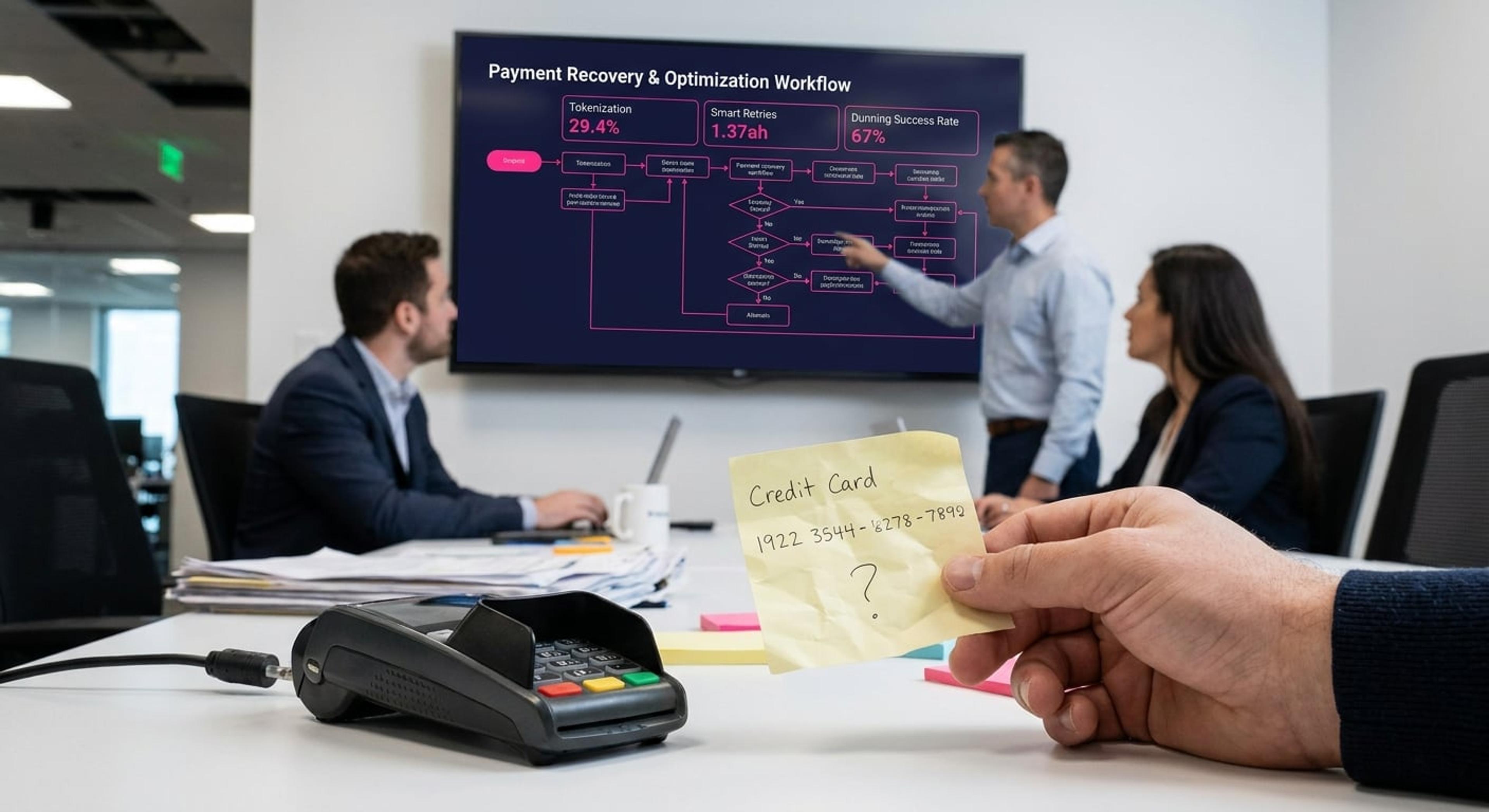

When a transaction fails, it rarely tells you the whole story. The “payment declined” message sitting in your dashboard might look like a lost sale, but that’s only true of the time. The reality of payment authorization is much more nuanced. Some declines are permanent roadblocks, while others are simply temporary hiccups in the payment processing flow. For teams focused on revenue optimization, understanding the difference between a soft decline and a hard decline is the first step toward recovering lost transactions without racking up unnecessary network fees. Knowing when to retry a payment, and just as importantly when to walk away, can turn a leaky checkout funnel into a reliable revenue engine.
The cost of ignoring this distinction is twofold. First, you leave salvageable revenue on the table. In fact, false declines cost e-commerce merchants US$174 billion in 2024 (Source). Second, you risk damaging your merchant processing relationships by behaving recklessly within the payment ecosystem. To build a mature revenue operation, you have to look beneath the surface of a generic failure message and understand the mechanics driving the decision.
The Anatomy of the Issuer Response
When a customer hits the buy button, the transaction request embarks on a rapid journey. It travels from the merchant’s checkout environment through the payment gateway, onto the acquiring bank, across the card networks, and finally lands at the issuing bank. The issuer evaluates the request based on available funds, account status, authentication signals, purchase velocity, and complex fraud risk models.
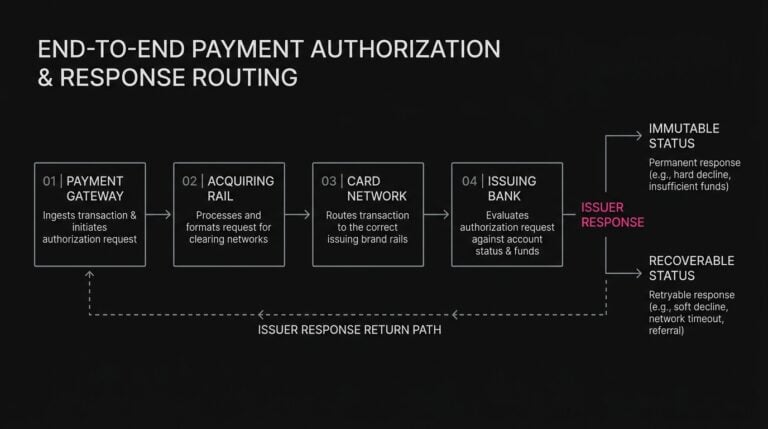
The issuer’s reply, known as the issuer response, comes back as a standardized code. If it’s an approval, the transaction proceeds and the funds are captured. If it’s a decline, the merchant is left to figure out the next steps based on a cryptic two-digit number. Not all declines are created equal, and they generally fall into two categories: hard and soft. Misinterpreting these categories is a common source of payment issues, leading merchants to either abandon perfectly good revenue or waste resources repeatedly hammering a closed account. Currently, approximately one-third of merchants have a payment success rate of less than 90% (Source).
Hard Declines: When a Transaction Declined Means No
A hard decline is the issuing bank’s way of saying the transaction will never succeed, no matter how many times you try. These occur for fundamental, unchangeable reasons. The account might be closed, the card might be reported lost or stolen, an expired card might be in use, or the card number provided might be entirely invalid. Common hard decline codes indicate that the financial instrument itself is no longer viable.
The Risk of Ignoring Hard Declines
Retrying a hard decline is a futile exercise. The underlying issue won’t be fixed by waiting, trying at a different time of day, or making a second attempt. More importantly, blindly retrying these transactions introduces operational and financial risks. Card networks rigorously monitor merchant retry behavior. Repeatedly attempting to charge a known bad card, a stolen card, or a closed account can trigger network penalties and inflate your processing costs with unnecessary gateway fees. Over time, poor retry discipline can damage your standing with your processor and payment service providers, leading to higher reserve requirements or account reviews.
When you encounter a hard decline, the best operational step is to halt the automated retry process immediately. The resolution requires direct intervention from the customer. The merchant should pause the service or hold the order and prompt the user to update their billing information, verify their card details, or provide an alternative payment method.
Soft Declines and the Art of Payment Recovery
Soft declines represent a temporary failure in the authorization chain during a card payment. Across the industry, soft declines make up between 80% to 90% of all declines (Source). The card is valid and the account is technically open, but a specific condition prevented the transaction from clearing at that exact moment. Common triggers include insufficient funds, daily spending limits being reached, cross-border fraud flags, or even generic network timeouts between the acquirer and the issuer.
Because the roadblock is temporary, soft declines are the primary opportunity for payment recovery. A transaction that fails on a Thursday afternoon due to insufficient funds might clear easily on Friday morning after payroll direct deposits hit the account. Notably, nearly one-third of insufficient funds declines involve low-risk payments or trusted recurring merchants. A card declined for unusual cross-border activity might succeed a few hours later once the cardholder responds to a text alert from their bank confirming the purchase is legitimate.
Navigating Generic Decline Codes
The challenge with soft declines is that issuers are not always transparent. Generic decline codes, such as the notoriously vague “Do Not Honor,” can mask the true reason for the failure. Treating all soft declines with the same blanket retry schedule is inefficient. Recovering this revenue requires a more thoughtful approach to timing, frequency, and historical pattern recognition.
How to Decide When to Retry Failed Payments
Deciding when and how to attempt a second charge is where operational strategy separates from guesswork. A naive approach, such as retrying every twenty-four hours for five consecutive days, often brings diminishing returns and irritated cardholders. Instead, payment optimization requires analyzing the specific decline code, the time of the original failure, and the typical behavior of that particular issuing bank.
Timing and Frequency Trade-Offs
The core problem in retry logic is balancing the desire to save the sale against the cost of the attempt. Every ping to the network incurs a transaction fee. If your retry cadence is too aggressive, processing costs can quickly outweigh the profit margin on the recovered sale. Businesses spend up to 15% of the payment value trying to recover a failed payment (Source).
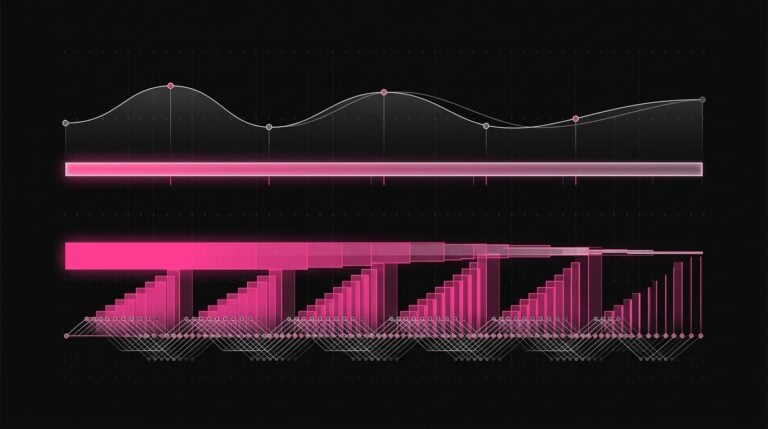
Effective strategies often involve dynamic pacing. For example, if a payment failed due to insufficient funds, delaying the retry until a likely payday, such as the first or fifteenth of the month, often works better than retrying the very next day. If the failure was caused by a temporary network timeout, an immediate, subtle retry within the same session might resolve the issue without the customer even noticing the delay. The goal is to maximize the transaction approval rate while minimizing the operational drag of wasted attempts.
Tackling Subscription Payment Issues
The stakes for intelligent retries are particularly high for recurring billing models. In a traditional retail environment, a failed payment usually happens while the customer is still looking at the checkout screen, so they can simply pull another card out of their wallet and resolve the issue on the spot. In a SaaS or subscription e-commerce model, the failure happens in the background. Yet recovering those accounts is critical, as subscriptions recovered from involuntary churn continue on average for seven more months.
Subscription payment issues are a leading cause of involuntary churn. Involuntary churn makes up about 48% of all churn for subscription businesses (Source). When a monthly renewal fails, the customer is rarely making an active choice to cancel their service. The payment infrastructure is simply failing to collect the funds. Managing these recurring payment failures requires a delicate balance between automated backend retries and customer-facing communication.

Dunning and Automated Recovery
Dunning, the systematic process of communicating with customers about failed payments, should work in tandem with your retry logic, not ahead of it. A common operational approach is to let the automated retry engine attempt to recover the payment quietly first. If a soft decline is resolved within a few days through a smart retry, the customer never needs to receive an alarming email about a suspended account or a canceled subscription. Only after the intelligent retry sequence is fully exhausted should the merchant escalate to a manual prompt for new payment details.
Managing Chargebacks and Downstream Risks
While optimizing for higher approval rates and chasing down soft declines, merchants must also keep an eye on downstream risks, primarily chargebacks. A chargeback occurs when a cardholder disputes a transaction with their issuing bank, forcing a reversal of the funds. The financial impact extends beyond the lost revenue of that specific sale. Merchants are also hit with separate dispute fees, and high chargeback ratios can threaten their ability to process payments on standard terms.
The Connection Between Retries and Disputes
Aggressive or poorly configured retry strategies can inadvertently trigger chargebacks. If a customer tries to cancel a subscription, assumes the account is closed, and then sees a charge go through two weeks later because of a drawn-out retry sequence, their first instinct is often to file a dispute with their bank. Furthermore, if a merchant retries a transaction so many times that the issuing bank flags the behavior as suspicious, it can depress approval rates across the board for that merchant’s future processing volume.
Prevention involves clear communication and logic constraints. If you are going to hold an order and retry a payment later, the customer should understand the billing terms. Defending against disputes requires keeping clean, accessible logs of the original authorization attempt, the specific decline reasons, and the subsequent successful retry. When the acquirer requests evidence for a dispute, a transparent, rule-abiding retry history can support your case.
Specialized Infrastructure to Reduce Payment Declines
Building the infrastructure to handle nuanced retry logic is rarely a core competency for growing businesses. Many traditional payment providers and gateways offer basic retry tools, but they tend to be broad and lack the specialization required for complex, data-driven recovery strategies. They might let you set a basic schedule, but they rarely adapt to real-time changes in network conditions or issuer behavior.
Integrating specialized payment optimization tools becomes necessary as transaction volume scales. Different industries have different optimal recovery windows. A digital media subscription might benefit from aggressive, short-term retries, while a B2B software platform might need a longer, more spaced-out recovery window. Comparing your primary gateway’s default tools to specialized alternatives is a practical step for any revenue operations team looking to systematically reduce payment declines.
This is where specialized platforms fit into the ecosystem. For example, SmartRetry gives merchants the ability to optimize intelligent retries of declined transactions based on historical data and issuer behavior. By applying targeted logic to specific decline codes rather than relying on generic schedules, platforms like this help merchants recover revenue and improve transaction approval rates while keeping processing costs in check. In fact, combining network tokens with machine learning optimization delivers an authorization uplift of 2-7% over PAN-based transactions (Source).
Resolving Checkout Issues for Long-Term Growth
At the end of the day, a declined transaction is a friction point in the customer journey. For the merchant, it represents revenue trapped in the system. For the customer, it’s a frustrating barrier to getting the product or service they want. S. consumers say they would never return to a merchant after a false decline. Overcoming checkout issues requires moving beyond a pass-fail view of payments.
Distinguishing between hard and soft declines is the baseline. The real work lies in how you operationalize that knowledge across your payment stack. A thoughtful approach to retry logic means accepting that not every transaction can be saved, while making sure the ones with potential are handled with precision. By stepping away from rigid, one-size-fits-all retry schedules and moving toward contextual, data-informed recovery strategies, teams can protect their margins, reduce customer friction, and turn payment failures from a cost center into a reliable lever for revenue growth.



 Find me on Linkedin