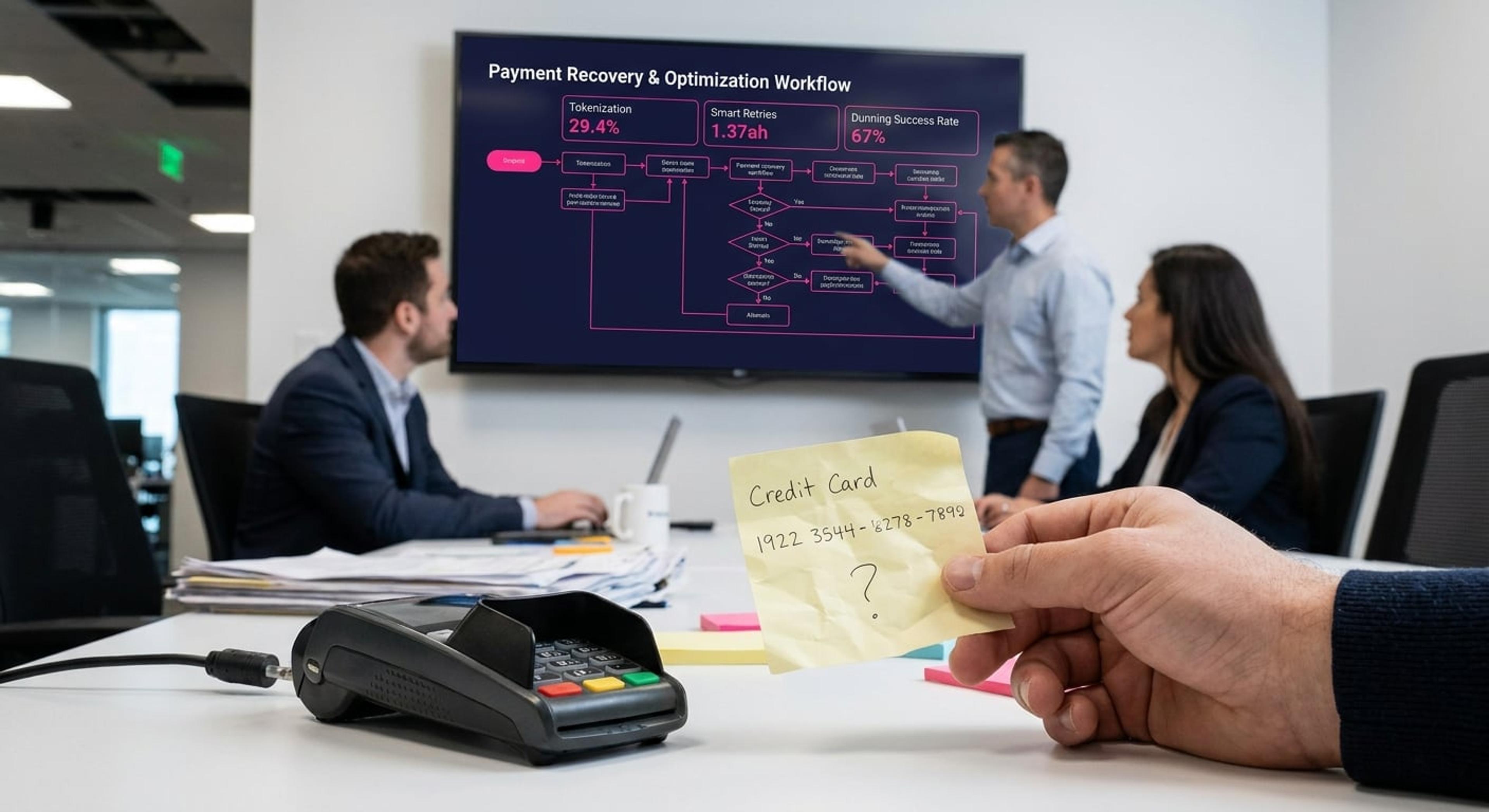

A recurring payment fails, the system flags it, and revenue is suddenly at risk. For subscription businesses and digital platforms, this is a daily reality. A card declined at renewal can disrupt access, frustrate the user, and steadily chip away at your bottom line, particularly given that renewals account for an average of 62% of subscription revenue (Source). The traditional reflex is to fire off an automated email to the customer demanding an immediate update to their payment details. Yet the standard approach to these communications frequently does more harm than good. When payment failures pile up, the difference between losing a subscriber and keeping them often comes down to the quality of your dunning emails.
Dunning, a term derived from a 17th-century word meaning to demand payment of a debt, still carries the heavy, punitive tone of its origins in many software stacks. Customers receive cold, robotic alerts warning them of suspended accounts and failed transactions. But today’s payment issues are rarely the result of a customer trying to dodge a bill. Usually a card has simply expired, a bank has flagged an unfamiliar charge, or a temporary network timeout disrupted the payment processing flow.
Treating a logistical hiccup the way a collection agency treats a debt is a fast way to encourage churn, an issue top of mind for the 72% of subscription business leaders who worry about churn impacting their bottom line (Source). To recover revenue effectively, payment operations teams must rethink their dunning strategy from the ground up, blending operational intelligence and industry best practices with clear, empathetic communication.
The Technical Reality Before You Press Send
Before drafting a single line of email copy, it helps to understand why the transaction declined in the first place and whether an email is actually necessary right now. Not all payment declines require immediate customer intervention.
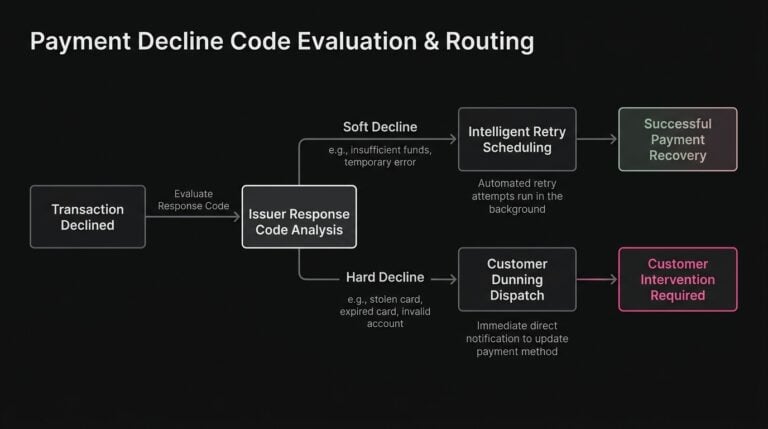
When a merchant requests payment authorization, the customer’s bank evaluates a complex set of risk and availability factors. The resulting issuer response comes back as a decline code. These codes generally fall into two categories: hard declines and soft declines.
A hard decline indicates a permanent issue. The card might be reported lost or stolen, or the account closed entirely. In these scenarios, the payment will never succeed on that specific card, no matter how many times you try. The customer must provide a new payment method, which makes a dunning email immediately necessary.
Soft declines are temporary, caused by insufficient funds, momentary network outages, or overly strict fraud filters. In many of these cases, sending an email right away only creates unnecessary anxiety for the customer. The smartest initial move is often a silent retry.
This is where a mature payment optimization strategy comes into play. Rather than shifting the burden to the customer at the first sign of trouble, platforms like SmartRetry focus on intelligent retries of declined payment transactions. By analyzing decline codes and timing retries around optimal authorization windows, these tools help merchants recover revenue and improve approval rates behind the scenes, with research showing subscription merchants see an average 22% increase in recovered revenue for every additional payment recovery method they use (Source). Only when these strategic retries have run their course should the dunning email sequence begin.
Writing Subject Lines That Get Opened
If a customer does need to intervene, your first hurdle is simply getting them to open the email. People are naturally suspicious of emails about billing, accounts, or unexpected charges. If a subject line feels like a phishing attempt or sounds overly aggressive, it will go straight to the trash.
The goal of a dunning subject line is clarity over panic. Avoid all capital letters, excessive exclamation points, or alarming phrasing like “Action Required: Account Suspension Imminent.” Fear might drive a temporary spike in open rates, but it damages trust and creates a hostile user experience.
Instead, rely on clear, recognizable language that states the facts calmly. Using the customer’s name or the specific name of your product helps establish immediate legitimacy. A subject line like “Update your billing details for [Product Name]” or “We couldn’t process your latest invoice” tells the user exactly what to expect before they even read the first sentence.
The Anatomy of High-Converting Body Copy
Once the customer opens the email, you have a few seconds to explain the problem and provide the solution. The most effective dunning emails share a common structural DNA: they are brief, empathetic, and relentlessly focused on the next step.
Start With Context, Not Blame
Begin by plainly stating what happened without accusing the user. Use passive or collective phrasing about the failure itself. “Your payment declined” can feel accusatory, while “We ran into an issue processing your latest payment” feels like a shared logistical puzzle. Acknowledge that these things happen. Banks are overly cautious, cards expire, and billing systems occasionally misalign, with 42% of consumers having experienced problems with the administration of their subscription some point (Source).
Explain the Impact Clearly
The customer needs to know what this means for their access to your product or service. If you offer a grace period, which you should whenever economically feasible, tell them exactly when it ends. Ambiguity is the enemy of action. A clear statement like, “To keep your subscription active without interruption, please update your payment method by Friday, October 12th,” sets a firm boundary while giving them breathing room to resolve it.
Provide a Frictionless Solution
The single biggest point of failure in payment recovery is the friction involved in updating a card. If your email tells the customer to go to your website, log in, navigate to their account settings, find the billing tab, and update their payment information, a significant percentage of them will simply abandon the process.
To resolve checkout issues and recover failed payments, the call to action to update payment must be as seamless as possible. Use a single, prominent button or link that takes them directly to a secure billing update page. Ideally, use magic links or tokenized sessions that bypass the need for a username and password. The less friction a user encounters between reading the email and typing in their new card number, the higher your recovery rate will be.

Structuring the Escalation Cadence
A single email is rarely enough to resolve subscription payment issues. People are busy, inboxes are crowded, and updating a credit card feels like a chore, not least because 74% of surveyed consumers say it is easy to forget about monthly recurring subscription charges (Source). A well-structured dunning cadence typically unfolds over two to four weeks, gradually increasing in urgency without ever losing its professional tone.
Day 1: The Gentle Nudge
Once internal attempts to retry failed payments have been exhausted, send the first email. This message assumes the best of the customer, treating the failure as a minor oversight or a bank error. The tone is light, helpful, and strictly informational. At this stage there is no threat of account suspension, just a friendly request to provide a payment update or take a look at the billing profile.
Day 3 to 5: The Helpful Reminder
If the first of your dunning messages goes unanswered, the second serves as a practical follow-up. It might briefly reiterate the value of the product to remind the customer why they subscribed in the first place. This is also an excellent time to offer customer support. Sometimes a payment fails because the user is trying to switch to a different tier, or they have a question about their invoice that they haven’t gotten to asking. A direct line to a support agent can save a relationship that an automated billing link cannot.
Day 7 to 14: The Impending Deadline
By the third email, the tone needs to shift from a gentle reminder to a clear warning about service interruption. The empathy remains, but the focus turns to the deadline. State the exact date that access will be restricted. This email often yields the highest response rate, as the loss of a valuable tool or service suddenly becomes a tangible reality for the user.
Final Notice: The Graceful Exit
If all previous attempts fail, the final email confirms that the subscription has been paused or canceled. However, this shouldn’t burn the bridge. Leave the door wide open for them to return, with a link to reactivate the account instantly whenever they are ready. A canceled subscriber today is often a returning subscriber six months from now, provided their exit experience wasn’t hostile. Recovering these accounts is crucial, as Stripe data shows that when a monthly subscription is recovered, the subscription typically lasts another seven months on average.
Aligning Communication with Operational Data
The most sophisticated billing operations do not rely on static email templates or treat dunning as a one-size-fits-all sequence. They tailor the communication based on the data available to them.
For example, if the issuer response indicates an expired card, the email copy should specifically mention expiration. “It looks like the card we have on file for you may have expired” is much more helpful than a generic “Payment Failed” message. The customer instantly knows which card is the problem and why it needs replacing, saving them the mental effort of guessing what went wrong.
Similarly, if a customer has a long history of successful payments and this is their first decline, you might extend their grace period and delay the more urgent emails, knowing they are a highly reliable user. A newly acquired user whose very first renewal fails, on the other hand, might require a tighter cadence to ensure they aren’t attempting to exploit a free trial, especially since it takes about 5-7 billing cycles to recoup acquisition expenditure for a typical B2C customer (Source).
Measuring the Health of Your Recovery Efforts
To continuously reduce payment declines and improve your communication strategy, treat dunning emails like any other crucial product metric. Open rates and click-through rates will tell you whether your subject lines and body copy are effective, but the ultimate metric is the recovery rate, the percentage of failed transactions that are successfully recaptured-with platforms like Checkout.com reporting that they rescue 20% of payments entered into their dunning mechanism (Source).
Monitor where drop-offs occur in your flow. If users click the link in your email but fail to complete the card update, the problem isn’t your email copy. It’s the user experience on your billing page. Perhaps the page isn’t optimized for mobile devices, or it asks for too much redundant information. Every required field is another opportunity for the customer to close the tab and move on with their day.
Rethinking the Customer Experience
Ultimately, writing dunning emails that actually work requires a shift in perspective. It is easy for product and finance teams to view a failed payment purely as lost revenue. From the customer’s point of view, though, it is an administrative burden they did not plan.
By viewing dunning as an extension of customer support rather than a debt collection exercise, teams can fundamentally change the dynamic. Combine intelligent, behind-the-scenes payment routing to minimize declines with clear, empathetic, and frictionless communication for the declines that do occur, and you create a system that protects your revenue while reinforcing the customer’s trust in your brand. In fact, reducing involuntary churn by just 12.5% can generate 3.5% revenue growth in as little as 60 days (Source).
A failed payment is a moment of friction, but how you handle it determines whether that friction causes a permanent fracture or simply a minor bump on a long and profitable customer journey.



 Find me on Linkedin