

The financial ecosystem is undergoing a quiet but fundamental rewiring as traditional institutions aggressively import top-tier technology talent to overhaul their legacy systems. Meanwhile, checkout experiences are fragmenting into dozens of new methods and rails. This evolution offers merchants better conversion opportunities and global reach, but the underlying complexity of routing, fraud prevention, and authorization creates unprecedented friction behind the scenes. As banks get smarter and routing becomes more complex, unprepared merchants inevitably face a spike in payment issues. Understanding how these macro shifts impact the microscopic reality of a declined checkout is no longer optional.
The mechanisms governing transaction success or failure are growing increasingly complex as payment optionality expands. Payment teams no longer just manage simple connections between acquirers and card networks. They must navigate a web of machine learning algorithms, real-time settlement rails, and dynamic risk models. Maintaining a healthy bottom line requires businesses to understand the changing intelligence of financial institutions and adapt their optimization strategies accordingly.
Understanding the New Intelligence in Banking
When legacy financial institutions make high-profile technology leadership changes, it signals a strategic shift in handling transaction data and risk. For example, the Bank of Ireland recently hired Citigroup’s Prag Sharma as chief AI officer. This highlights how deeply artificial intelligence is being embedded into the core operations of major banks. This represents a fundamental change in the payment processing flow rather than a mere administrative update. Traditional banks are shifting away from static, rule-based risk systems toward dynamic, machine-learning-driven models that evaluate authorization requests in milliseconds.
An issuer’s risk model no longer just looks at the cardholder’s available balance and CVV match. Instead, it evaluates behavioral velocity, device fingerprinting, historical merchant interactions, and subtle anomalies in the transaction metadata. If a merchant’s payment request lacks the expected data richness or presents an unusual pattern, the AI model is highly likely to reject it.

The Escalating Threat Landscape
This rapid adoption of AI by issuing banks is largely a defensive maneuver. The democratized nature of artificial intelligence means that threat actors are also scaling their efforts with unprecedented sophistication. In 2024 alone, Visa blocked $40 billion in fraudulent activity using AI models (Source). Recent industry discussions detailing how churches can prevent AI scams, impersonation, and payment fraud clearly illustrate that advanced social engineering and synthetic identity fraud are no longer restricted to high-value corporate targets. Small organizations, local businesses, and nonprofits are increasingly targeted by automated fraud rings and AI-generated phishing attacks.
Because these threats are becoming ubiquitous, issuing banks are forced to tighten their risk thresholds. The secondary effect of this heightened security posture is that a significant share of legitimate transactions gets caught in the net. Dialing up a bank’s fraud prevention tools inevitably increases false decline. For merchants, having a legitimate customer with ample funds is no longer a guarantee of a successful transaction.
The Business Impact of Expanding Infrastructure
Beyond the intelligence of the banks approving the transactions, the actual rails moving the money are undergoing a massive transformation. The drive for better customer experiences has led to an explosion of alternative payment methods, each carrying its own unique operational logic and risk profile.
The recent evolution in business-to-business commerce has made flexible financing a baseline expectation. The move by Affirm to provide installment payments for Amazon Business customers completely shifts the dynamics of B2B purchasing. Expanding checkout optionality is great for conversion, but it introduces complex variables into the payment lifecycle. B2B transactions typically involve higher average order values and complicated approval hierarchies. Introducing installment payments into this mix multiplies the number of times merchants must interact with payment networks over a prolonged period. This vastly increases the surface area for subscription payment issues and recurring payment failures. A card valid for the initial checkout might expire, lose funds, or get flagged by an issuer’s AI model before the final installment is captured.

Cross-Border Complexity and Settlement Rails
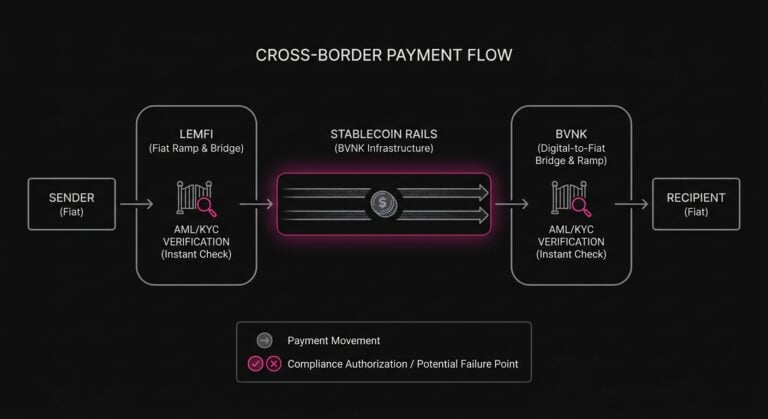
Global money movement presents equal complexity. Fintechs are actively bypassing traditional correspondent banking networks in favor of faster and more efficient rails. For instance, LemFi taps BVNK to move cross-border payments onto stablecoin rails. This leverages blockchain technology to settle funds without the traditional friction of multiple intermediary banks. Similarly, TP Bank selected terraPay for real-time cross-border payments to provide instant liquidity across different global markets.
While stablecoin rails and real-time networks bypass traditional SWIFT delays, they introduce a different set of challenges for payment authorization. In recurring card billing, cross-border authorization rates typically sit at 72–80% compared to 85–90% for well-optimized merchants (Source). Bridging fiat currency to digital assets and back across different regulatory jurisdictions requires instant compliance checks like Anti-Money Laundering and Know Your Customer verifications. If any piece of data is misaligned during this split-second handover, the transaction will fail. Furthermore, a card declined on a novel cross-border rail might not return the clear diagnostic codes merchants usually receive from legacy card networks. This lack of standardization makes troubleshooting and payment recovery incredibly difficult.
Actionable Recommendations for Payment Teams
Navigating an ecosystem with dynamic AI and fractured checkout optionality requires a highly proactive approach. Payment operations teams can no longer rely on default processor settings. They must actively engineer their payment flows for resilience.
The first step to reduce payment declines is to conduct a granular analysis of your authorization data. Not all payment failures are equal, and treating them as a monolithic problem is a costly mistake. An insufficient funds error requires a vastly different recovery strategy than a generic do not honor response or a suspected fraud block. Payment teams must categorize these declines into hard and soft categories while mapping out the specific issuer response for each. Understanding exactly why an issuing bank blocked a transaction forms the foundation of any successful recovery effort.
Deconstructing the Issuer Response
When dealing with AI-fortified banks, payment teams must realize that an issuer response is no longer a static rule. It is a probabilistic decision based on the data presented at that exact moment. If a transaction is declined, simply sending the identical payload through the same routing path a second later is an exercise in futility. Aggressive and identical retries can actively harm a merchant’s reputation with the issuing bank, potentially leading to a permanent suppression of their transaction approval rate.
Merchants should instead implement intelligent routing and tokenization strategies. Utilizing network tokens rather than raw primary account numbers can significantly boost trust with issuers, driving an acceptance rate lift of up to +15% (Source). These network tokens are inherently tied to the device and the specific merchant relationship. Additionally, passing enriched data like Level 2 and Level 3 processing data for B2B transactions gives the issuer’s AI model more context. This added context reduces the likelihood of a false positive fraud trigger.
Timing and Strategic Logic
The timing of a retry is just as critical as the data within the payload for recurring billing and installment setups. If a customer’s payment fails on a Friday evening, attempting to capture those funds on a Saturday morning might yield poor results since traditional direct deposits often clear early in the workweek. Payment teams should analyze their historical authorization data to identify the optimal days of the week and times of day to retry failed payments based on the specific card type, issuer, and geographic region.
Integrating Account Updater services ensures merchants automatically receive new credentials when a customer gets a newly issued card. This frequently happens when previous cards are compromised in automated fraud sweeps. This passive optimization prevents completely avoidable declines from expired or replaced cards.
Smart Solutions for Transaction Recovery
Counteracting the sophisticated AI models deployed by banks requires an equally sophisticated approach on the merchant side. Relying on basic time-delayed retry loops is insufficient when an issuer’s dynamic risk engine blocks a legitimate charge. This is where specialized infrastructure becomes highly valuable. SmartRetry serves as a natural extension of a merchant’s payment stack. It operates as a platform focused on payment optimization and intelligent retries of declined transactions, helping merchants recover revenue and improve approval rates. For context, automated smart retries recover approximately 57% of failed recurring payments (Source). By analyzing the contextual metadata of a decline and dynamically adjusting retry variables like timing, routing, and data formatting, intelligent systems ensure that recovery efforts work in harmony with issuer expectations rather than fighting blindly against them.
Elevating Your Payment Strategy
The modernization of the financial stack is moving at an unrelenting pace. The complexity of moving money is at an all-time high, driven by traditional banking institutions appointing chief AI officers and the rapid deployment of cross-border stablecoin rails. While these advancements offer incredible opportunities for growth and scale, they also build a highly sensitive authorization environment where the slightest data anomaly can result in lost revenue.
The mandate is clear for payment professionals, growth leaders, and revenue optimization teams. The era of treating payment processing as a commoditized utility is over. Successfully navigating this landscape requires treating payment authorization as a strategic discipline. By deeply analyzing decline data, respecting the advanced intelligence of issuing banks, and deploying dynamic recovery strategies, merchants can transform their payment operations from a cost center into a resilient driver of sustainable revenue. Since financial infrastructure is constantly learning, the most successful payment teams will be the ones that adapt right alongside it.



 Find me on Linkedin