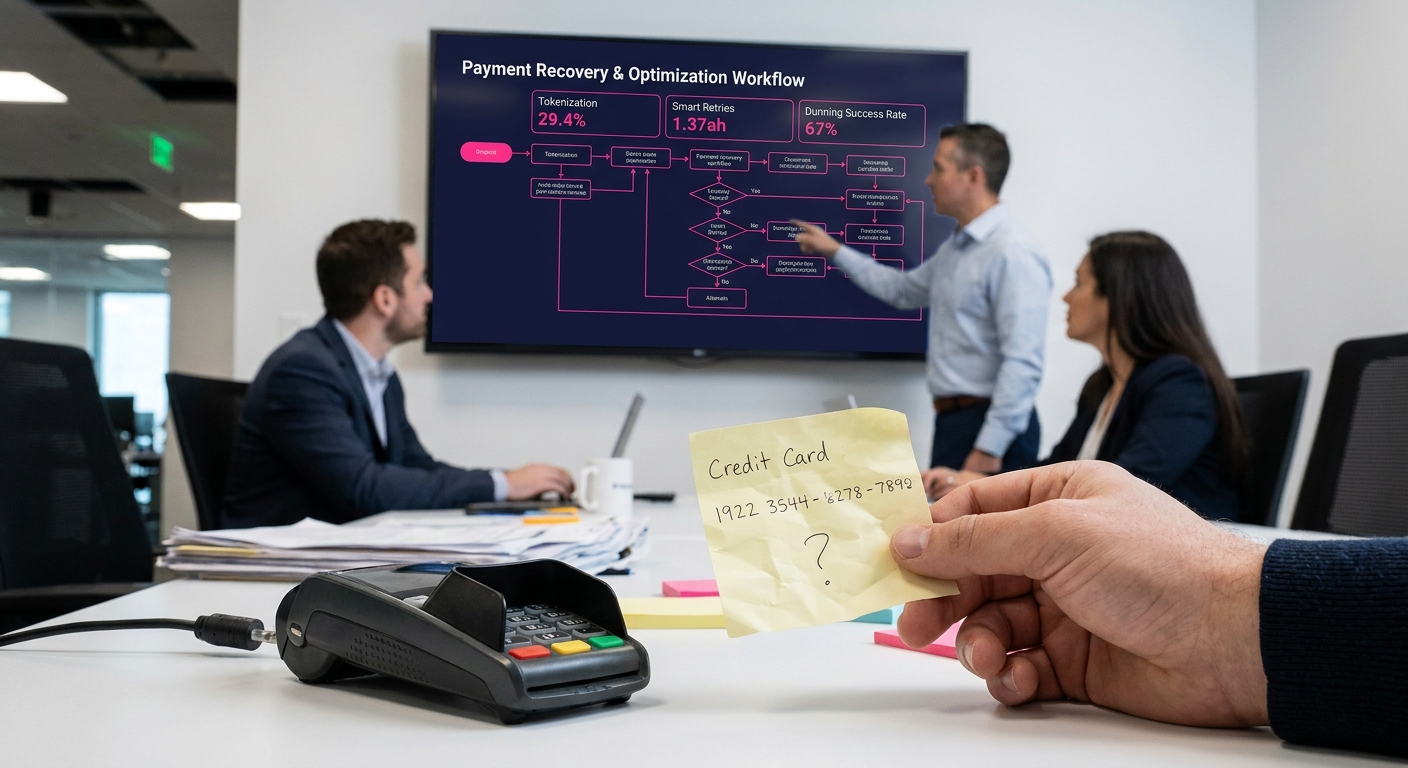

The architecture of global payments is shifting rapidly, and standalone gateways are no longer enough. Fragmented acquiring relationships create blind spots that cost merchants serious revenue, driving sophisticated operators to demand deeply integrated systems. When components of the payment stack operate in silos, payment failures become inevitable. Diagnosing the root cause of a declined transaction then feels more like forensic accounting than standard operations. However, a major wave of consolidation is reshaping how money moves by merging disparate layers of the payment processing flow into unified, highly responsive engines.
Recent market movements reflect this reality perfectly. Acquirers are embedding directly into orchestration layers, specialized routing engines are merging with billing platforms, and even the deepest infrastructural rails are upgrading for speed. For payment teams, understanding this structural shift is no longer optional. It is the baseline for maintaining competitive transaction approval rates in an increasingly complex digital economy.
The Convergence of Acquiring and Control Layers
To understand the current trajectory of payment optimization, we have to look at the structural changes happening between payment service providers and orchestration platforms. A prime example is the recent development where Ecommpay brings full-stack acquiring to PayControl. On the surface, this sounds like a standard integration. Mechanically, however, it represents a fundamental shift in how payment issues are managed.
Historically, merchants patched together their payment processing flow by using one provider for the gateway, a separate orchestration layer to route transactions, and multiple regional acquirers to process the funds. In 2025, 62% of merchants preferred a multiprocessor setup, compared to 50% in 2023 (Source). This fragmentation meant that when a transaction was declined, the data passed back through the chain was often diluted. An acquirer might receive a highly specific decline code from the issuing bank, but by the time that data passed through the gateway and reached the orchestration layer, it was often stripped down to a generic Do Not Honor message.
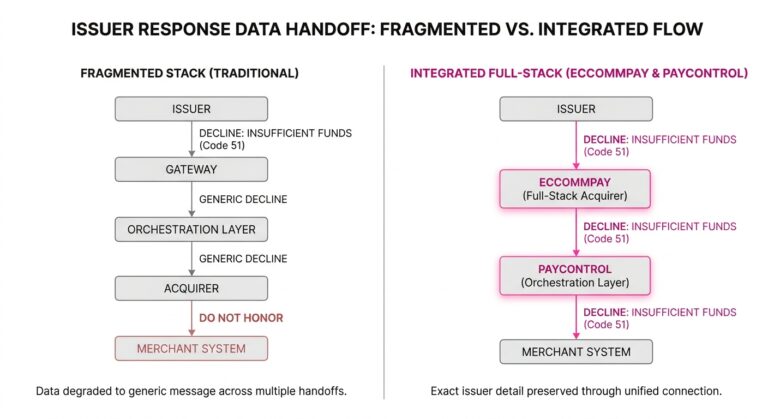
Full-stack acquiring changes this dynamic. When an acquiring bank owns its own gateway, processing capabilities, and risk engines, integrating natively with a comprehensive management platform like PayControl collapses the data supply chain. The orchestration layer gains unfiltered, real-time access to the exact issuer response. This level of granularity allows merchants to separate a temporary authorization glitch from a hard block for suspected fraud.
This convergence is not an isolated event but rather a macro trend defining the industry. We can see a similar philosophy at play when examining what DLocal’s ACI Worldwide payments orchestration deal means for shareholders and merchants. ACI Worldwide operates massive, legacy-grade switching infrastructure, while DLocal specializes in navigating the notoriously complex acquiring landscapes of emerging markets. By bridging ACI’s overarching orchestration capabilities with DLocal’s hyper-local acquiring depth, merchants gain a singular view into regions where transaction declined rates historically run high.
The Business Impact of a Unified Payment Flow
For revenue leaders and payment operations teams, the convergence of the payment stack directly impacts the bottom line. Every time a card is declined at checkout, the business suffers a multi-layered loss. The immediate revenue vanishes, the customer acquisition cost is wasted, and the lifetime value of that buyer is jeopardized by a frustrating user experience.
When acquiring and control platforms speak the same language fluently, the merchant’s ability to reduce payment declines increases dramatically. Richer data allows for dynamic routing based on Bank Identification Number performance, time of day, or specific transaction values. If a primary acquiring route is experiencing latency or elevated decline rates from a specific issuer, a unified platform can detect the anomaly and seamlessly route the transaction to a secondary acquirer before the checkout session times out.
The need for this speed and clarity is amplified by sweeping upgrades to global banking infrastructure. As consumer expectations shift toward instant settlement, legacy asynchronous processes are becoming a liability. A clear example of this infrastructural modernization is evident as Swift builds a corridor for real-time cross-border payments in Canada. Cross-border payments have traditionally been a black box of correspondent banking delays, hidden FX fees, and opaque authorization standards.

When infrastructure like the Swift network upgrades to support real-time cross-border settlement, the acquiring and orchestration layers sitting on top of it must be equally responsive. You cannot support real-time global payments if your orchestration layer takes precious seconds to parse conflicting decline codes from a disconnected acquirer. Tighter integrations ensure that when a cross-border payment is initiated, the risk assessment, authorization request, and issuer response happen with the speed and precision required for real-time fulfillment.
The Complexities of Subscription Operations
While unified acquiring stacks offer immediate benefits for one-off digital checkouts, the stakes are entirely different for recurring billing models. Subscription payment issues represent a unique operational challenge because the checkout experience is entirely passive. When a renewal fails, the customer is not sitting in front of a screen ready to provide a new credit card number.
Preventing involuntary churn in the subscription space requires deep collaboration between the billing engine and the payment router. This is exactly why the industry sees specialized partnerships forming, such as when Juspay teams with Recurly on subscription payments. Recurly brings deep expertise in billing logic, dunning management, and customer lifecycle tracking. Juspay complements this with hyper-specialized payment routing and tokenization capabilities.
When a recurring transaction is declined, the merchant has a very narrow window to recover the funds before the subscription must be canceled. Network data indicates that 90% of recovered transactions occur within the first 10 days after failure (Source). Generic retry attempts often trigger network penalties or further frustrate the risk models of the issuing bank. By pairing a specialized subscription engine with a highly intelligent routing layer, merchants can optimize their retry cadences. They can delay a retry attempt until the customer’s typical payday or automatically update expired card details using network tokenization before the authorization is even requested. This tailored approach separates highly profitable SaaS and subscription businesses from those bleeding revenue through unmanaged payment failures.
The Automation Temptation and the Need for Boundaries
As payment stacks become more integrated and the data flowing through them becomes richer, the natural inclination for many technology teams is to automate everything. The industry is currently captivated by the potential of artificial intelligence to analyze vast swaths of transaction data, autonomously routing or retrying payments to maximize the transaction approval rate.
However, payment infrastructure is highly regulated, and the card networks operate on strict, unforgiving rules. This reality was recently highlighted by industry observers noting that AI agents need rules before they can run payments, which is a critical insight for any operations team.
An unchecked machine learning algorithm focused purely on conversion might notice that retrying a card declined for insufficient funds every four hours eventually results in a successful capture. From a pure revenue perspective, the AI assumes it has solved the problem. From an operational perspective, however, the AI has just violated card network mandates regarding excessive retries. This exposes the merchant to severe financial penalties and potentially risks their entire merchant account.
Automation in payment recovery must be heavily bounded by business logic. The orchestration layer and the acquiring platform must work together to feed accurate data into the rules engine. This ensures automated agents respect the difference between a soft decline that can be retried strategically and a hard decline that must never be retried. Intelligence in payments is not just about raw computational power. It is about applying that power within the strict compliance frameworks of the global financial system.
Actionable Strategies for Payment Teams
Navigating this interconnected landscape requires payment professionals to step away from traditional, set-it-and-forget-it gateway configurations. To leverage the full power of modern acquiring and orchestration, teams should consider the following strategic adjustments:
- Audit Your Decline Data: Map exactly what happens when a payment fails in your system. Check whether you are receiving raw, actionable issuer response codes or if they are being masked by a legacy gateway. If your data is opaque, you cannot optimize your recovery strategy.
- Implement Dynamic Routing: Leverage the capabilities of modern orchestration platforms to route transactions based on real-time performance. Ensure your platform can handle intelligent fallbacks without introducing noticeable latency to the customer experience.
- Separate Hard and Soft Declines: Build strict operational rules around your decline codes. Hard declines, like lost or stolen cards, should immediately trigger customer outreach for new payment details. Soft declines, including temporary network issues or risk flags, should be routed into an intelligent retry flow.
- Embrace Network Tokenization: Work with your acquiring partners to implement network tokens.
- Establish Guardrails for Automation: If you are utilizing automated routing or recovery agents, ensure your operations team has explicitly programmed the network retry rules into the system. Never allow a black-box algorithm to repeatedly hit an issuer with failed authorization requests.
Bridging the Gap Between Routing and Recovery
Even with a perfectly optimized, full-stack acquiring setup and a world-class orchestration layer, some legitimate transactions will inevitably fail. Issuers utilize incredibly complex, proprietary risk models that occasionally miscategorize valid purchases. This is where dedicated recovery platforms become a vital component of the modern revenue engine. SmartRetry operates entirely in this specialized space to focus on intelligent retries of declined payment transactions. By analyzing the nuanced data provided by modern acquiring integrations, SmartRetry applies highly calibrated, rules-compliant retry strategies. This helps merchants recover lost revenue safely and serves as the final, critical layer in maximizing overall transaction approval rates, particularly given that one in four retried transactions is recovered.
The Long-Term View on Payment Architecture
The era of the disjointed, commoditized payment stack is drawing to a close. As global commerce becomes faster, more borderless, and increasingly subscription-based, tolerance for opaque payment issues is rapidly disappearing. The payment orchestration platform market is projected to expand from $1.45 billion in 2023 to $6 billion by 2030, representing a compound annual growth rate of 23.2% (Source).
The moves we see across the industry all point toward a singular goal of absolute clarity in the payment processing flow. Acquirers are embedding into control platforms, orchestration layers are absorbing local payment expertise, and legacy banking rails are upgrading for instant settlement.
For merchants and payment teams, the mandate is clear. Those clinging to siloed, legacy payment infrastructure will continue to struggle with unexplained payment declines and stagnant approval rates. Conversely, those who embrace the convergence of full-stack acquiring, intelligent orchestration, and highly disciplined transaction recovery will transform their payment operations. They will shift from managing a necessary cost center to operating a formidable driver of strategic growth.


 Find me on Linkedin