

A customer clicks the buy button, the loading spinner makes a few optimistic turns, and then a red banner appears. The card was declined. It looks like a simple rejection, perhaps a maxed-out credit line or a mistyped expiration date, but payment failures rarely have a single cause. Across the industry, the average global card authorization rate is typically 85-90% (Source). They come from a fragmented chain of independent systems, including gateways, processors, card networks, and issuing banks, each making rapid risk assessments with incomplete data.
There is no silver bullet for preventing these failures. It takes cleaner data sent to issuers, routing around localized network bottlenecks, and retrying failed payments without triggering the fraud filters you are trying to avoid. When an authorization fails, the reason is usually structural, operational, or behavioral, and each calls for a different response.
Why Good Transactions Go Bad: Unpacking Payment Failures and How to Fix Them
What Actually Happens in the Milliseconds Before a Decline?
To understand why legitimate transactions get blocked, it helps to see the payment flow as a series of negotiations rather than a pipeline. The merchant’s checkout collects payment credentials and passes them to a gateway. The gateway encrypts the payload and sends it to the acquiring bank or processor, which routes it through a card network such as Visa or Mastercard to the customer’s issuing bank.
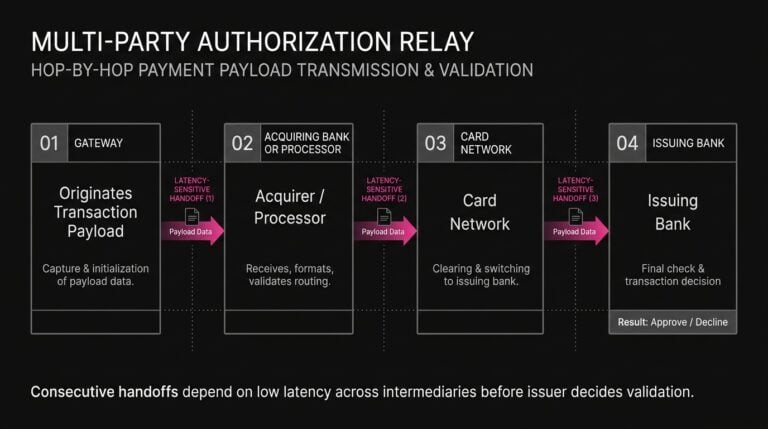
Every participant in this relay has its own uptime constraints, formatting standards, and risk appetite. The acquirer wants protection from merchant default and compliance fines. The card network cares about throughput and protocol standards. The issuer carries the ultimate liability for fraud and credit default, so its risk engines are tuned to be cautious.
The issuer doesn’t see a loyal subscriber or a well-intentioned shopper. If any field conflicts with the issuer’s rules, or a server along the path responds too slowly, the transaction is rejected. The error message is then simplified several times on its way back, turning a specific technical or risk concern into a generic rejection.
The Four Horsemen of Payment Declines
There are dozens of response codes, but almost all failures fall into four operational buckets. Separating them is the first step toward a recovery strategy that works.
1. Customer-Side Friction and Credential Decay
This is the most visible category. A customer enters the wrong CVV, uses a card that expired last month, or exceeds their available credit. In recurring billing, it shows up as credential decay, as cards get lost, stolen, or reissued after a data breach, silently breaking the stored payment methods subscription businesses rely on.
2. Issuer Risk Heuristics and False Declines
Issuers use automated scoring models to decide in milliseconds, and since they rarely share how those models work, legitimate purchases often get caught. A spike in velocity, an unfamiliar MCC, a cross-border purchase, or a transaction at an unusual hour for that cardholder can trigger a cautionary decline. The customer has the funds and the card is valid, but the algorithm decides the pattern looks out of character.
3. Technical Drop-Offs and Payload Translation Errors
Sometimes a decline has nothing to do with the customer or their bank. Gateways hit latency spikes, acquirer connections drop, and network switches go down for maintenance. Failures also happen during payload translation. When a merchant uses a modern JSON-based API, the provider must translate the request into the legacy formats older acquiring rails require. If a flag such as the customer-initiated versus merchant-initiated indicator is mapped incorrectly, the issuer rejects the request on technical grounds.
4. Acquirer and Merchant Configuration Mismatches
Before a transaction reaches the network, the merchant’s processor applies its own velocity limits, maximum ticket sizes, and geographic restrictions based on the underwriting profile. A business that launches a flash sale or enters a new region without updating these settings may find the acquirer blocking the influx at the gate to limit its own exposure.
Decoding the Issuer Response: Hard vs. Soft Declines
When a transaction fails, the issuer returns a two-digit alphanumeric code. Gateways often group these codes into broader categories, which suits a dashboard but hides the nuance recovery depends on.
Operationally, declines are divided into hard and soft declines:
- Hard declines indicate a permanent condition that rerunning the card won’t fix, such as stolen cards, closed accounts, or invalid numbers. Retrying them is futile and draws network scrutiny and punitive fees.
- Soft declines are temporary failures where the card is valid and the account open, but the transaction couldn’t complete at that moment. Insufficient funds, issuer timeouts, and generic risk blocks fall here.
An issuer might return it because the customer is slightly over a daily limit, a fraud filter flagged the IP address, or its authorization server hiccupped. Treating every generic decline the same leaves revenue on the table, but treating them all as infinitely retryable quickly damages a merchant’s standing with the networks.
How to Prevent Failures Before the Customer Clicks Pay
The cleanest way to handle a failed payment is to prevent it on the first request, by improving the data sent to the issuer and removing checkout friction. Over 90% of merchants use various tactics to boost authorization rates (Source).
Network Tokenization and Account Updaters
To combat credential decay, merchants can replace raw Primary Account Numbers (PANs) with network tokens provisioned by the card brands. These tokens stay linked to the underlying account even when a card is lost or reissued. Because each token is merchant-specific and carries a dynamic cryptogram, issuers see tokenized transactions as lower risk, which supports healthier approval rates. Tokenized transactions drive a 4.8% increase in authorization rates versus primary account numbers (Source). Account Updater services keep legacy PANs fresh before scheduled billing runs, as average global token adoption increased by 6% from Q1 2024 to Q1 2025 (Source).
Passing Clean Metadata and CIT/MIT Flags
Issuers want context. A subscription signup is a Customer-Initiated Transaction (CIT), with the cardholder present to provide a CVV or complete two-factor authentication. Monthly renewals are Merchant-Initiated Transactions (MIT) that happen while the customer is offline.
If a renewal goes out without the MIT flag or the original network transaction ID, the issuer sees a random card-not-present transaction with no CVV, and the result is an avoidable decline. In Q4 2023, Visa observed card-not-present authorization approval rates 6% lower than card-present approval rates (Source). Auditing payloads so CIT/MIT indicators, postal codes, and level-two or level-three data are formatted correctly gives the risk engine the context it needs to approve the charge.
Right-Sizing Fraud and 3DS Rules
Fraud tools and 3D Secure (3DS) are necessary defenses against chargebacks, but rigid rules create self-inflicted checkout problems. A filter that blocks every customer whose billing address doesn’t match their IP geolocation turns away travelers and remote workers, and a 3DS challenge on every transaction drives cart abandonment. Exemptions such as Transaction Risk Analysis (TRA) under PSD2 let low-risk transactions skip extra authentication and go straight to authorization.
The Architecture of Payment Recovery: Routing and Retries
Even with clean data and tokens, soft declines will happen. Paydays shift, bank servers go down, and issuer risk models fluctuate. Mature payment operations stand out in how they respond in the seconds, hours, and days that follow.
Multi-Acquirer Routing and Failover
A single processor is a single point of failure. Acquirers also differ by geography and local banking relationships, and a domestic acquirer usually gets better authorization rates with local issuers than one routing from another continent. Across all categories, authorization rates for international cards drop 5-15 percentage points due to cross-border verification requirements and fraud prevention measures (Source).
With multiple processors, businesses can route dynamically by card BIN, currency, and real-time processor health. If the primary gateway times out or returns a localized error, a failover rule can send the request through a backup acquirer without disrupting checkout.
Why Static Retry Schedules Fall Short
In recurring billing, the traditional answer has been rule-based dunning: if a payment fails Monday, retry Thursday, then Sunday, and email the customer to update their card.
Static schedules treat all declines as identical. Retrying an insufficient funds decline daily rarely works if the customer is paid on the first and fifteenth. Waiting three days after a brief issuer outage gives the customer time to reconsider or churn passively. Worse, hammering issuers with repeated attempts lowers the merchant’s approval ratio. Issuers monitor those rates, and they may penalize a merchant’s entire traffic stream, setting off a downward spiral of false declines.
Intelligent Retries and Transaction Recovery
To reduce declines without network penalties, payment teams increasingly use data-driven retry logic instead of calendar rules. Intelligent recovery systems analyze the raw response code, card BIN, issuing country, amount, and historical patterns across similar cards.

This is where specialized infrastructure fits in. Platforms like SmartRetry focus on payment optimization and intelligent retries of declined transactions, helping merchants recover revenue and improve approval rates by evaluating these signals before retrying. By holding back hopeless attempts and timing valid retries to historical approval windows, such as local payday cycles or post-maintenance periods, teams recover failed transactions while staying within network compliance thresholds.
Navigating the Trade-Offs in Payment Optimization
Every payment flow adjustment balances competing priorities, and chasing authorization rates alone can backfire.
- Approval Rates vs. Fraud Exposure: Relaxing risk filters or dropping CVV requirements pushes more transactions to the issuer and likely lifts approvals. But if fraudsters use the opening to test stolen cards, the chargebacks will hurt the merchant’s reputation with acquirers and issuers and invite stricter blocks.
- Recovery Volume vs. Processing Costs: Visa and Mastercard charge fees for excessive retries and penalize retries of hard declines, and every attempt carries a gateway fee. Recovering a handful of low-value subscriptions while racking up thousands of failed-attempt fees can easily turn net-negative.
- Silent Recovery vs. Customer Communication: Messaging a customer the moment a payment fails can prompt them to enter a new card, or remind a lukewarm subscriber to cancel. Giving background retries a few days to resolve soft declines before dunning emails often preserves both the transaction and the relationship.
Treating Payments as a Product, Not Plumbing
For years, many businesses treated payments as back-office plumbing, set up once, handed to finance, and ignored unless checkout went offline.
In reality, the payment layer behaves like a core product feature, sitting where user experience, risk management, and unit economics meet. A fractional shift in issuer responses translates directly into retained customers and revenue, without extra marketing spend. Typical card authorization rates reach 91-96% for optimized merchants (Source).

Fixing payment failures doesn’t require rebuilding your billing stack overnight. It starts with visibility: separating technical errors from risk blocks, auditing your metadata, keeping credentials current through tokenization, and replacing blunt calendar retries with logic that respects how issuers evaluate risk. Send cleaner signals, and the ecosystem tends to reward you with fewer red banners and more completed checkouts.



 Find me on Linkedin